What Are the 7 Best Continuous Carbon Fiber Production Lines
Choosing the right Continuous carbon fiber production line requires more than comparing advertised output rates. Manufacturers must examine precursor handling, furnace temperature control, tension management, surface treatment, and spool winding accuracy. Each stage affects fiber strength, consistency, and production cost. A line may promise high throughput, yet unstable tension can create uneven tow, weak spots, or frequent breaks.
This guide reviews seven leading production lines through practical and technical criteria. It considers heating efficiency, carbonization control, automation, maintenance access, energy consumption, and compatibility with different tow sizes. Factory experience matters here. Operators notice details that brochures often miss, such as noisy guide rollers, difficult filter replacement, or delayed temperature recovery after loading. Small issues become expensive over time. Some systems also perform better in laboratory trials than in continuous industrial operation. That difference deserves honest attention.
Real value depends on the complete production environment. Raw material quality, workforce training, ventilation design, and after-sales support can change the final result. A premium line is not automatically the best choice for every plant. Smaller producers may prefer modular equipment, while high-volume facilities may need advanced monitoring and redundant controls. The comparison therefore balances performance with reliability, serviceability, and long-term operating demands. It also recognizes uncertainty, because published specifications do not always reveal real-world limitations. The following selection offers a careful starting point for engineers, investors, and production managers assessing modern carbon fiber manufacturing equipment.
What Is a Continuous Carbon Fiber Production Line?
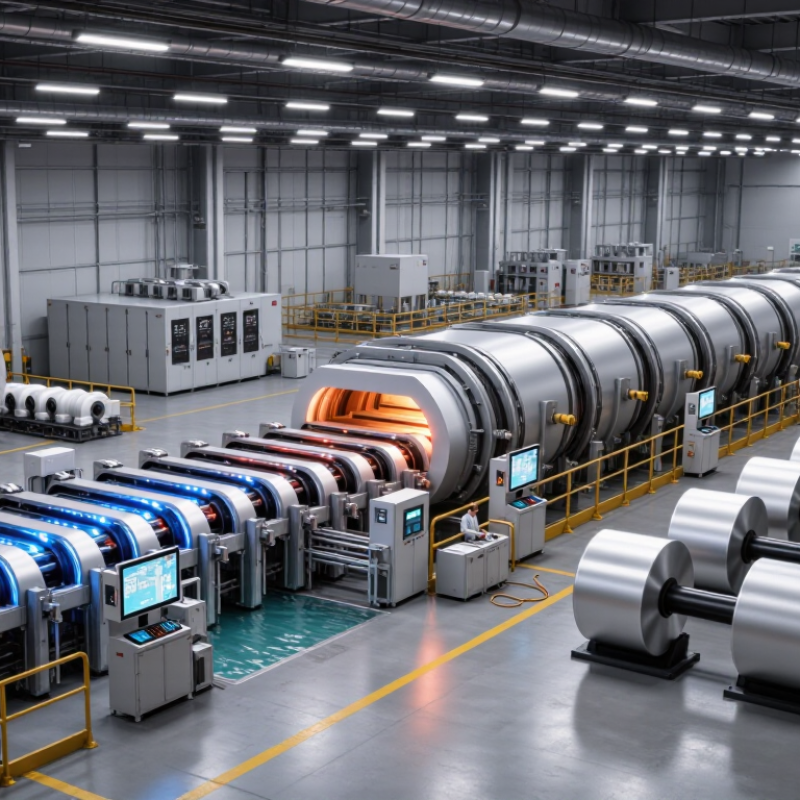
A continuous carbon fiber production line is an integrated system that converts precursor fiber into strong, lightweight carbon fiber. The fiber travels through connected treatment zones without repeated loading or unloading. This continuous movement improves consistency and reduces handling damage. Tension must remain stable throughout the process. Even a slight alignment error can affect the final fiber’s strength.
The line usually includes unwinding units, oxidation ovens, carbonization furnaces, surface treatment equipment, washing sections, drying units, and winding stations. Controlled heat removes non-carbon elements from the precursor fiber. Inert gas protects the material during high-temperature carbonization. Sensors monitor temperature, line speed, tension, and gas conditions in real time. These measurements help operators identify weak points before an entire production run is affected. Small details matter.
When evaluating the seven best production lines, engineers should examine temperature uniformity, energy efficiency, automation, maintenance access, and output stability. A reliable line should maintain steady fiber movement during long operating periods. It should also provide clear data for quality testing and traceability. In practice, no system performs perfectly under every factory condition. Dust, worn rollers, and changing humidity can still influence results. This is where experienced operators remain valuable, even with advanced controls. A practical design makes cleaning simple and allows safe access to critical components. Consistent carbon fiber requires both precise machinery and disciplined daily inspection.
How Continuous Carbon Fiber Production Works Step by Step
Continuous carbon fiber production begins with precursor tow, usually thousands of fine polymer filaments gathered into one bundle. The line unwinds this tow under controlled tension, then guides it through heated stabilization ovens. Oxygen reacts with the polymer structure, creating a stable ladder-like form that can survive higher temperatures. This stage is deceptively sensitive. Uneven heating may cause weak spots or broken filaments.
After stabilization, the tow enters carbonization furnaces filled with nitrogen or another controlled inert atmosphere. Temperature increases through several zones, often reaching above 1,000°C. Non-carbon elements leave as gases, while the remaining atoms form a stronger carbon structure. Some production lines add a hotter graphitization stage to improve stiffness. Rollers, ceramic guides, and tension sensors must work together continuously. Excess tension can stretch the tow; insufficient tension can create wrinkles.
The carbonized fiber then receives a surface treatment to improve bonding with resin. A thin sizing layer follows, protecting filaments during handling and supporting later composite processing. Automated sensors monitor line speed, furnace temperature, gas flow, tow tension, and fiber appearance. Technicians still inspect samples for strength, diameter, and surface quality. Machines help, but judgment remains important. A production line may look stable while small alignment errors quietly reduce performance. Better systems record these changes early, although no process is perfectly self-correcting.
How Continuous Carbon Fiber Production Works Step by Step
The chart shows representative operating temperatures for seven major stages in a continuous PAN-based carbon fiber line. Actual settings vary by precursor, target tensile properties, line speed, and fiber grade. Stabilization typically occurs at 200–300°C, carbonization at approximately 800–1,600°C, and optional graphitization at about 2,000–3,000°C. Surface treatment and winding are generally performed near ambient temperature.
What Criteria Identify the Seven Best Production Lines?
The seven best continuous carbon fiber production lines are not chosen by speed alone. A credible evaluation starts with fiber handling, resin control, and repeatable heating. The line should keep tow tension stable from creel to winding station. Small tension changes can create gaps, fuzz, or uneven impregnation. Operators need clear access to rollers, sensors, and cleaning points. Practical experience matters here. A polished specification cannot replace a clean, reliable trial run.
Impregnation quality is the central technical test. Inspectors should measure resin content, voids, fiber alignment, and surface consistency across the full width. Stable temperature zones must match the resin system, not merely display attractive numbers. Line speed should remain steady during starts, stops, and material changes. Data logging strengthens reliability. It should record tension, temperature, pressure, speed, alarms, and batch identity. Independent samples and calibrated instruments make comparisons more trustworthy. Some projects overlook this. They should not.
A strong line also earns points for maintainability, energy use, operator safety, and future capacity. Modular stations can reduce downtime when a heater or coating unit needs service. Guarding, emergency stops, ventilation, and ergonomic controls deserve documented checks. Energy meters reveal whether output gains are real or only purchased with waste. Buyers should score pilot results, training quality, spare-part access, and technical support. I would also test recycled or lower-cost feedstock cautiously, because performance may shift. No line is perfect. The best choice fits the required product, workforce, and quality risk.
Seven Leading Continuous Carbon Fiber Production Lines Compared
Comparing the seven leading continuous carbon fiber production lines requires more than checking rated output. A reliable review examines precursor handling, stabilization, carbonization, surface treatment, sizing, and spool winding. Each stage affects tensile strength, consistency, and production cost. Small temperature changes in stabilization can alter fiber color and breakage rates.
Line One emphasizes compact pilot production and easier process adjustment.
Line Two targets high throughput with longer furnace zones and automated tension control.
Line Three focuses on heat recovery, reducing energy waste during carbonization.
Line Four suits high-strength grades, where stable tension protects filament alignment.
Line Five offers flexible tow-size changes, useful when production schedules vary.
Line Six relies on advanced sensors to detect uneven heating and fiber breaks quickly.
Line Seven uses modular equipment, allowing manufacturers to expand capacity without rebuilding the entire plant.
The strongest choice depends on material grade, factory space, labor skills, and energy prices. A high-output line may appear efficient, yet frequent changeovers can reduce its real advantage. Energy recovery also sounds impressive. Its maintenance demands deserve closer inspection. Operators should compare uptime records, furnace uniformity, scrap rates, and test results from multiple batches. Independent tensile and modulus testing adds confidence. Even then, no line performs perfectly under every recipe. Careful trials remain essential.
How to Choose the Right Production Line for Your Application
Choosing among the seven best continuous carbon fiber production lines requires matching the process to the application, not chasing maximum speed. The main options include pultrusion, filament winding, braiding, thermoplastic tape production, thermoset prepreg, tow spreading, and automated fiber placement. Each line handles tension, resin content, curing, and waste differently.
The 2024 MarketsandMarkets Carbon Fiber Market report projects growth from about USD 4.7 billion in 2023 to USD 6.6 billion by 2028. That growth increases pressure to scale, but scale alone does not guarantee quality.
Start with the finished part. Pultrusion suits constant profiles and steady dimensions. Filament winding fits pressure vessels and round structures. Thermoplastic tape lines support fast reshaping and welding.
For aerospace-grade laminates, prepreg or automated placement lines may provide better control. Check fiber volume fraction, line speed, temperature uniformity, tension stability, and resin compatibility. Measure them on actual material, not only supplier brochures. Small variations matter.
Energy use deserves attention. The International Energy Agency continues to identify industrial efficiency as a major decarbonization pathway, while carbon fiber processing can involve substantial heating demand. A shorter curing cycle may reduce cost, but it can also create weak zones. That trade-off is easy to underestimate.
Test scrap rates, changeover time, maintenance access, and operator training before purchase. The cheapest line may become expensive after six months. Pilot trials reveal uncomfortable details. They are worth the delay.


