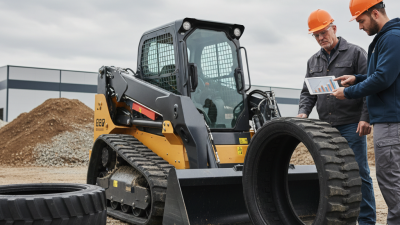
In the heavy equipment sector, efficiency and performance are critical. KTSU rubber tracks have gained recognition for enhancing machinery capabilities. According to industry reports, utilizing rubber tracks can improve traction by 30%. This significant boost allows operators to navigate various terrains effortlessly. For construction and agriculture, this can mean substantial time savings.
KTSU rubber tracks are designed for durability. They often last 30% longer than traditional steel tracks. This durability can minimize equipment downtime and reduce replacement costs. Moreover, they offer a smoother ride, which improves operator comfort and reduces fatigue during long hours of operation. The growing trend towards rubber tracks reflects a shift towards more versatile solutions in machinery.
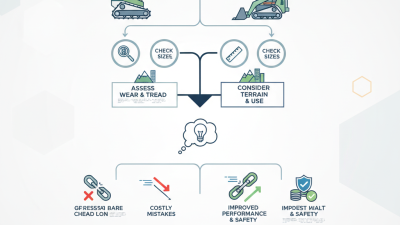
However, not all rubber tracks are equal. While KTSU presents several advantages, there are still factors to consider, such as initial cost and specific application suitability. Buyers need to assess their equipment's needs before investing. This analysis can prevent unnecessary expenses and maximize efficiency, ensuring that every operation runs smoothly.

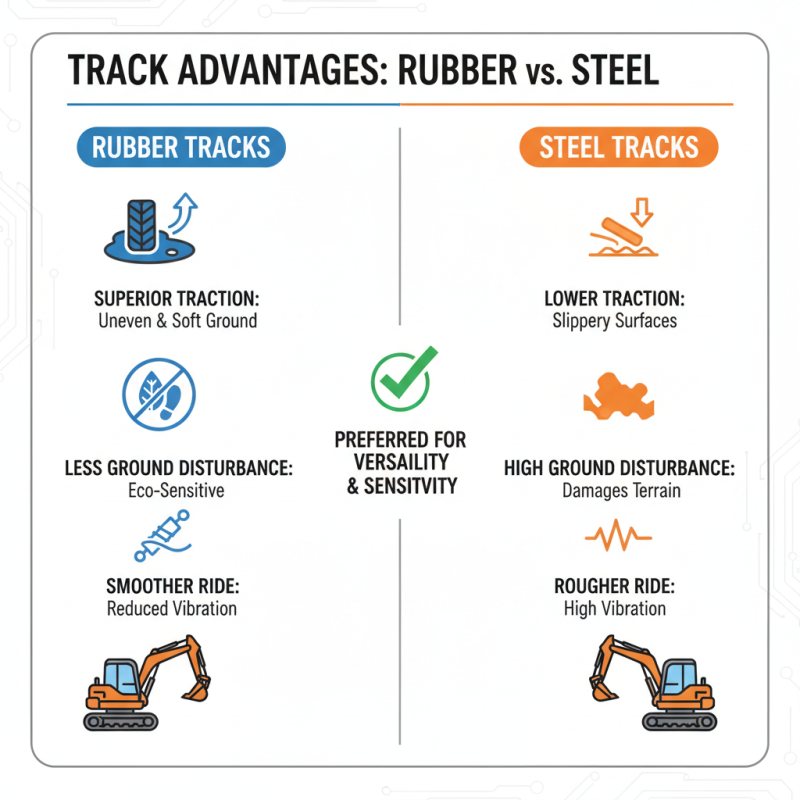
When comparing rubber tracks to traditional steel tracks, several advantages become clear. Rubber tracks provide superior traction on diverse terrains. They grip uneven ground effectively, reducing the risk of slippage. This is especially useful on muddy or soft surfaces where steel tracks might struggle. These tracks also produce less ground disturbance, making them ideal for sensitive environments.
Another benefit of rubber tracks is their lighter weight. This feature allows machines to operate more efficiently. A lighter weight reduces fuel consumption, saving costs over time. Additionally, rubber tracks tend to be quieter. Noise reduction can create a better working environment for operators and those nearby.
However, there are challenges too. Durability can be a concern, especially in harsh conditions. Rubber tracks may wear out faster than steel in tough situations. This requires regular inspections and possible replacements. Yet, the initial benefits can outweigh these drawbacks. Overall, the shift to rubber tracks represents a growing trend in heavy equipment.
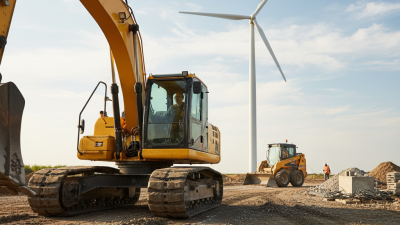
Rubber tracks are revolutionizing heavy equipment operations. They offer enhanced traction and stability in various terrains. This is crucial for tasks like excavation and landscaping. Operators can navigate muddy or uneven surfaces more confidently. The rubber material reduces ground pressure, minimizing the risk of soil damage. Heavy equipment remains steady, even on sloped surfaces.
In addition, rubber tracks provide excellent grip. This stability allows for better load management. Operators notice fewer accidents and mishaps during operation. However, some may still find challenges in maintaining optimal track tension. Regular checks are necessary to ensure performance. Not all terrains suit every type of track, highlighting the need for research. With proper application, rubber tracks elevate safety and efficiency in heavy equipment usage.
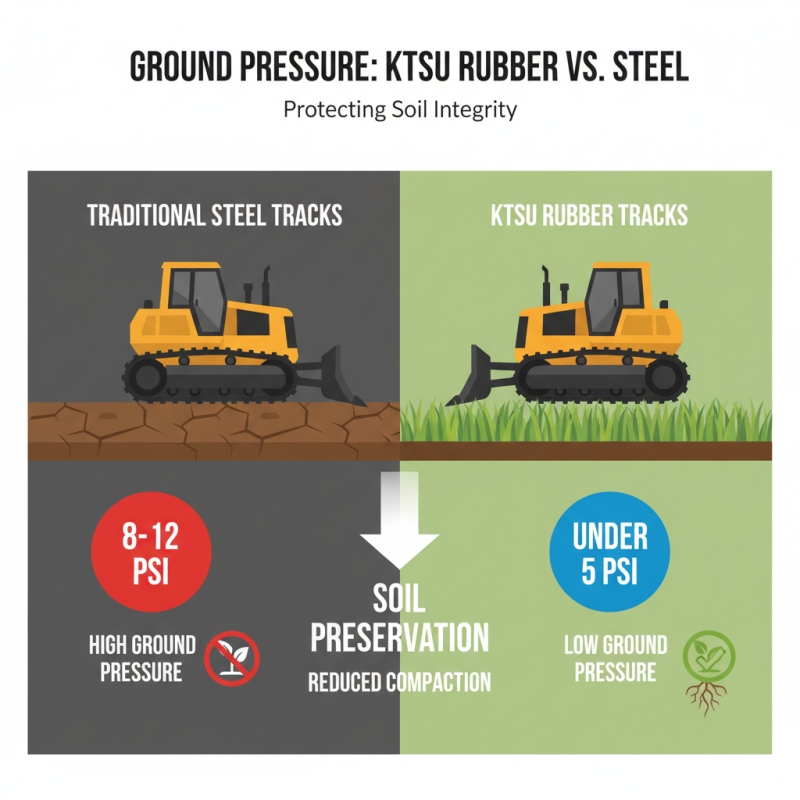
Reduced ground pressure is a significant advantage of using KTSU rubber tracks in heavy equipment. Traditional steel tracks can exert high pressure on soil, damaging its structure. In contrast, rubber tracks distribute the weight of the machinery more evenly. This results in lower ground pressure, often under 5 psi compared to 8-12 psi from conventional tracks. Such pressure levels are crucial for preserving soil integrity and preventing compaction.
Soil preservation is vital. Compacted soil affects water infiltration and root growth. A report by the American Society of Agronomy suggests that even minimal soil compaction can reduce crop yields by up to 15%. With rubber tracks, operators can reduce these negative impacts significantly. This is especially important in agricultural settings and sensitive environments where soil health is paramount.
Moreover, usage of rubber tracks leads to less environmental disturbance. This is essential in projects near wetlands or sensitive ecosystems. The ability to maneuver heavy equipment without causing excessive ground damage is a game changer. Despite these advantages, some may still hesitate due to cost or availability. However, the long-term benefits often justify the initial investment. The trade-offs are worth considering for sustainable practices in heavy equipment operations.
Noise and vibration levels in heavy equipment can impact operator comfort significantly. Studies indicate that excessive noise can lead to decreased productivity. For instance, prolonged exposure to noise levels above 85 decibels can cause hearing loss. Operators exposed to such conditions often experience fatigue and stress. These issues highlight the need for better solutions in heavy machinery.
Rubber tracks offer a practical approach to noise and vibration reduction. A report from the Construction Equipment Industry Association states that heavy equipment operating on rubber tracks can reduce vibration by up to 50%. This reduction lowers the strain on operators' bodies, allowing for longer work hours without added fatigue. Enhanced comfort leads to better focus and efficiency on the job site.
However, while rubber tracks provide benefits, they are not without drawbacks. Some operators report a learning curve in adapting to their handling compared to steel tracks. Additionally, rubber tracks may wear out faster on rough terrains, requiring timely replacements. These factors must be considered in decision-making processes for equipment selection. Ultimately, the balance between comfort and performance is crucial.
| Benefit | Description | Impact on Operator Comfort |
|---|---|---|
| Noise Reduction | Rubber tracks considerably lower noise levels compared to steel tracks. | Creates a quieter work environment, reducing operator fatigue. |
| Vibration Dampening | Rubber tracks absorb shocks and vibrations effectively. | Minimizes stress on the operator's body during operation. |
| Improved Traction | Rubber tracks offer superior grip on various surfaces. | Enhances stability, reducing risk of accidents. |
| Lightweight Design | Lighter than traditional metal tracks. | Easier to maneuver, leading to less operator strain. |
| Reduced Ground Pressure | Distributes weight evenly, lessening ground impact. | Promotes comfort when operating on soft or uneven terrain. |
| Durability | Engineered to withstand harsh conditions. | Reduces downtime for repairs, enhancing operational efficiency. |
| Low Maintenance | Requires less frequent servicing compared to metal tracks. | Allows operators to focus more on tasks than maintenance. |
| Versatility | Suitable for a variety of terrains and conditions. | Adapts to different operational needs comfortably. |
| Comfortable Driving Experience | Enhances overall driving comfort due to smooth suspension. | Reduces operator fatigue over long hours of use. |
| Environmental Benefits | Less environmental disturbance owing to lower ground impact. | Promotes sustainable operation practices. |
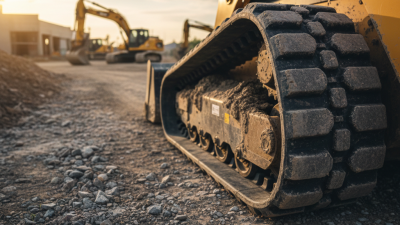
Rubber tracks are becoming increasingly popular for heavy equipment in harsh environments. One of the main advantages is their increased durability. Unlike traditional steel tracks, rubber tracks can withstand rough terrain without significant damage. They flex and adapt, allowing for better ground contact and traction, especially in muddy or uneven conditions.
The longevity of rubber tracks is another key benefit. With proper maintenance, these tracks can last much longer than anticipated. They resist wear and tear effectively, reducing downtime and repair costs. However, users must be aware of proper usage and care. Ignoring maintenance routines can lead to premature wear. It's essential to regularly inspect the tracks for cracks or tears, ensuring optimal performance.
In tough conditions, rubber tracks offer a unique advantage. They minimize vibration, which protects both the equipment and the operator. This comfort can lead to increased productivity on the job site. However, users must still be cautious about overloading the equipment. Balancing usage and load is vital to maximize the life of rubber tracks. The road ahead can be bumpy, but with the right approach, these tracks will provide excellent service.