


Choosing a Bluetooth Car Screen is not simply about finding the largest display or the lowest price. Global buyers face different dashboards, phone systems, road conditions, and installation expectations. A screen that works smoothly in a compact European hatchback may feel awkward in a larger SUV. Some models offer wireless Apple CarPlay and Android Auto, while others depend on cables, FM transmission, or external speakers.
Automotive technology analyst Sam Abuelsamid explains the core principle: “A feature is only useful if drivers can use it safely and consistently.” That idea guides this comparison. Each model is considered for connection stability, display brightness, microphone quality, audio performance, mounting strength, and everyday control. Small details matter. A loose suction mount can wobble over rough roads. A dim screen can become difficult to read under direct sunlight. A weak microphone may turn a simple call into repeated “Can you hear me?” moments.
No ranking is perfect. Personal preferences, vehicle layout, and local support can change the result. I may value a clean interface more than a bargain price, while another driver may prioritize a rear camera input or removable design. That difference is important. This guide examines ten leading Bluetooth Car Screen options for global buyers, including their practical strengths, limitations, compatibility concerns, and likely ownership experience. The goal is not to promise a perfect device. It is to help you choose one that feels dependable during ordinary journeys, from morning commutes to unfamiliar roads in another country.
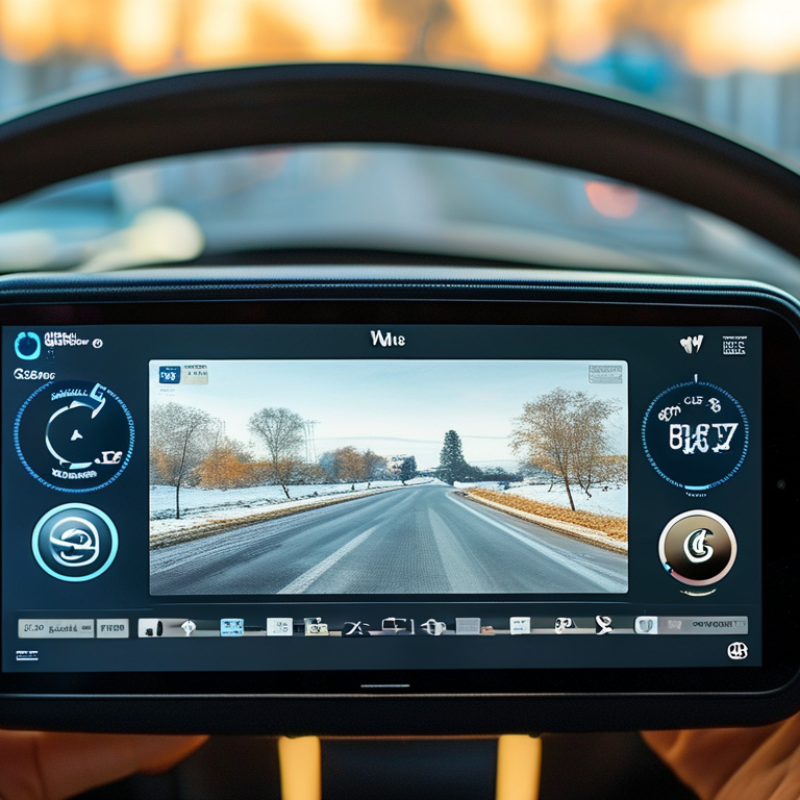
Top 10 Best Bluetooth Car Screens for Global Buyers
A Bluetooth car screen is a compact display that connects wirelessly with a phone, vehicle audio system, or selected accessories. It can support hands-free calls, music streaming, navigation mirroring, voice commands, and camera input. Bluetooth SIG’s 2024 Market Update forecasts annual Bluetooth device shipments will rise from about 5.4 billion in 2023 to 7.0 billion by 2028. That growth reflects stronger demand for simple wireless connections, including in-car displays. However, Bluetooth does not automatically provide internet access, GPS, or full smartphone integration.
The main display types include portable dashboard screens, mirror-mounted units, and rear-seat headrest displays. LCD panels are common and affordable. IPS screens usually offer wider viewing angles, useful when sunlight enters from the side. OLED panels can provide deeper blacks, but they may cost more and need careful brightness control. In practical installation, screen stability matters as much as resolution. A loose dashboard mount can create glare, vibration, and unsafe adjustments. A large screen is not always better. I still question whether some oversized displays improve driving awareness.
Tips: Check Bluetooth profiles, phone compatibility, microphone quality, and audio output options before buying. Look for at least 500 nits of brightness, an anti-glare surface, and physical controls when possible. Reports from the Consumer Technology Association also show continued growth in connected-device adoption, but compatibility remains uneven across markets. Test the screen with your own phone, because specifications can sound perfect and still disappoint.
Comparison of common Bluetooth car-screen configurations. Specifications are representative market ranges for generic product types and may vary by model, vehicle, region, and installation method.
| Rank | Generic Screen Profile | Main Display Type | Typical Screen Size | Typical Resolution | Bluetooth Capability | Core Functions | Audio Output Options | Installation Style | Best Suited For | Main Buying Consideration |
|---|---|---|---|---|---|---|---|---|---|---|
| 1 | Portable 10-inch Smart Car Screen Best Overall | Flat LCD touchscreen with LED backlight | 9.5–10.26 inches | 1280 × 480 to 1600 × 600 pixels | Usually Bluetooth 5.0 or later; supports hands-free calling and wireless audio pairing | Phone mirroring, navigation access, music control, hands-free calls, voice-assistant access, rear-camera input on selected models | Built-in speaker, FM transmission, AUX output, or Bluetooth connection to the vehicle audio system | Dashboard or windshield mounting; commonly powered through a 12 V vehicle socket | Drivers who want modern functions without replacing the factory head unit | Check viewing angle, mounting stability, FM frequency compatibility, and phone-mirroring support |
| 2 | 7-inch Double-DIN Multimedia Screen Best for Permanent Installation | In-dash capacitive LCD touchscreen | 6.8–7 inches | 800 × 480 to 1024 × 600 pixels | Typically Bluetooth 4.2, 5.0, or later; supports calls, contacts, and audio streaming | Bluetooth calling, media playback, navigation integration, steering-wheel-control support, camera input, radio reception | Integrated amplifier, speaker outputs, RCA pre-outs, and sometimes AUX input | Double-DIN dashboard installation; may require a fascia, wiring harness, and steering-control adapter | Vehicles with a standard double-DIN opening and users seeking an integrated appearance | Confirm dashboard dimensions, wiring compatibility, camera format, and local radio standards |
| 3 | 9-inch Portable Navigation Screen Best for Navigation | Wide-format LCD touchscreen | 8.9–9.5 inches | 1280 × 480 or 1600 × 600 pixels | Bluetooth 5.0 or later is common; supports smartphone pairing for calls and audio | Navigation through a connected smartphone, route display, music streaming, voice commands, phone-call management | FM transmitter, AUX output, Bluetooth audio, or integrated speaker | Portable dashboard or windshield mount with 12 V or USB power | Long-distance drivers and vehicles with limited built-in navigation functions | Navigation usually depends on the connected phone, mobile data, and compatible applications |
| 4 | Wireless Smartphone-Integration Screen Best for Connected Driving | Capacitive LCD touchscreen designed for wireless phone integration | 7–10.26 inches | 1024 × 600 to 1600 × 600 pixels | Bluetooth pairing is generally used for initial connection, calls, and audio; wireless integration may also use Wi-Fi | Compatible smartphone interface, navigation, calls, messages, music, voice assistant, selected vehicle controls | Bluetooth audio, AUX, FM transmission, or built-in speaker depending on configuration | Portable mount or aftermarket in-dash installation | Users who want phone-based vehicle interfaces while retaining the original car radio | Verify smartphone operating-system compatibility and whether wireless or wired operation is supported |
| 5 | 10.1-inch Android-Based Car Screen Best for App Flexibility | Large capacitive LCD touchscreen with an embedded operating system | 9.5–10.1 inches | 1280 × 720 or 1280 × 800 pixels | Bluetooth 5.0 or later is typical; supports calls, audio streaming, tethering, and selected peripherals | App installation, navigation, video playback when stationary, Bluetooth calling, Wi-Fi access, USB media playback | Built-in speaker, Bluetooth audio, AUX, RCA outputs, and sometimes FM transmission | Portable or vehicle-specific in-dash installation | Drivers wanting a standalone multimedia interface with more than basic phone mirroring | Review processor performance, memory, software-update policy, privacy settings, and cellular or hotspot requirements |
| 6 | Compact 5.5–7-inch Bluetooth Display Best for Small Vehicles | Compact LCD touchscreen | 5.5–7 inches | 800 × 480 to 1024 × 600 pixels | Bluetooth 4.2 or later; generally supports hands-free calls and music streaming | Basic phone connection, navigation display, music control, call handling, and limited camera support | Built-in speaker, AUX, or FM transmission | Portable dashboard mounting or compact in-dash installation | Small cars, older vehicles, and dashboards with limited available space | A smaller screen can reduce map readability; check button size and glare performance |
| 7 | Rear-View Mirror Bluetooth Screen Best for Discreet Mounting | Mirror-mounted LCD display, sometimes with a reflective mirror surface | 7–9.66 inches | 800 × 480 to 1280 × 480 pixels | Bluetooth usually supports hands-free calling and audio; camera pairing may use a separate wireless link | Rear-view display, reverse-camera monitoring, calls, music, and basic phone functions | Built-in speaker, FM transmission, AUX, or Bluetooth audio | Clips over or replaces the factory rear-view mirror; often uses a reverse-light trigger wire | Drivers prioritizing reverse-camera visibility and a clean dashboard layout | Ensure the mirror size, camera latency, brightness, and field of view suit the vehicle |
| 8 | Dual-Camera Safety Screen Best for Parking Assistance | LCD touchscreen or monitor with front and rear camera support | 7–10.26 inches | 800 × 480 to 1600 × 600 pixels | Bluetooth is commonly included for calls and audio; camera video typically uses wired or dedicated wireless connections | Front and rear camera viewing, parking guidance, recording on selected systems, calls, and music control | Built-in speaker, AUX, FM transmission, or Bluetooth audio | Dashboard, windshield, or mirror mounting; rear camera installation requires vehicle wiring | City driving, parking, fleet vehicles, and vehicles with limited rear visibility | Check camera waterproof rating, night performance, viewing angle, cable length, and reverse-trigger compatibility |
| 9 | High-Brightness Outdoor-Use Screen Best for Bright Conditions | Anti-glare LCD touchscreen with enhanced backlight | 7–10.26 inches | 1024 × 600 to 1600 × 600 pixels | Bluetooth 5.0 or later is common for hands-free calling and wireless audio | Navigation, phone integration, music, voice control, camera input, and improved daytime readability | Bluetooth audio, AUX, FM transmission, or built-in speaker | Portable dashboard or windshield mounting | Convertible, truck, van, and vehicles frequently used in direct sunlight | Look for anti-glare treatment, automatic brightness adjustment, heat tolerance, and a stable power connection |
| 10 | Rear-Seat Entertainment Bluetooth Screen Best for Passengers | Headrest-mounted or portable rear-seat LCD screen | 9–13.3 inches | 1280 × 720 or 1920 × 1080 pixels | Bluetooth may support headphones, speakers, keyboards, or selected audio devices; phone calling is not always included | Video playback, USB or memory-card media, wireless headphones, HDMI input on selected models, and passenger entertainment | Bluetooth headphones or speakers, built-in speaker, and wired headphone output | Headrest strap, seat-back mount, or portable installation | Families, passenger vans, and long-distance travel | Check mounting security, viewing angle, battery capacity, file-format support, and independent audio control |