
Learn More With Our

Blog

China Best 90° Peel Strength Tester for Global Buyers?

Choosing a China Best 90° Peel Strength Tester for global buyers requires more than comparing prices and screen sizes. The right instrument should produce repeatable results under clearly defined test conditions. It should also support the materials your laboratory actually evaluates, including adhesive tapes, labels, films, laminates, and flexible packaging.

A reliable 90° Peel Strength Tester normally provides controlled peeling speed, stable clamping, accurate load measurement, and a rigid test frame. Details matter. A loose clamp can distort the result. A rough roller can damage the backing material. Buyers should confirm force range, sample width, angle control, software functions, and calibration traceability before ordering. Standards such as ASTM D3330, FINAT methods, or internal procedures may require different settings. One machine may not fit every method perfectly.

Look beyond the catalogue.

Experienced suppliers should explain their measurement uncertainty, calibration process, spare parts, and after-sales support. Ask for factory videos, sample test reports, and a live demonstration with your own material. A low quotation may seem attractive, but weak documentation can create expensive retesting later. Still, no supplier is perfect. Even a well-built tester needs proper installation, operator training, environmental control, and periodic verification. This is where many purchasing plans become too optimistic. Global buyers should compare technical evidence, not only brand claims. A transparent manufacturer that admits limitations often deserves closer attention than one promising flawless performance. This guide examines practical selection criteria, supplier credibility, testing consistency, and long-term ownership value for international laboratories.
China Best 90° Peel Strength Tester for Global Buyers?

What Is a 90° Peel Strength Tester? Testing Principles Under ASTM D3330

China Best 90° Peel Strength Tester for Global Buyers?

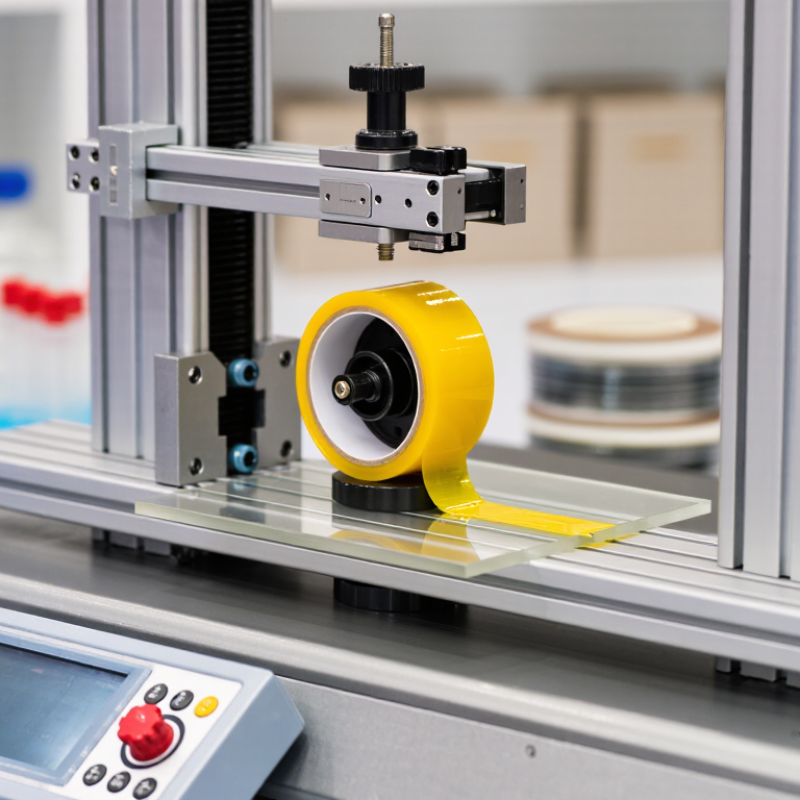
A 90° peel strength tester measures the force needed to separate adhesive tape from a rigid surface. The specimen is applied to a stainless-steel panel, pressed with controlled force, and allowed to dwell. ASTM D3330/D3330M, Method F, commonly uses a 90° peeling angle and a speed near 300 mm/min. Results are usually reported in N/25 mm or oz/in.

Small details matter.

The tester records force through a load cell while the tape moves steadily. Operators should control tape width, roller pressure, dwell time, temperature, and humidity. ASTM procedures often use a 25 mm specimen width and a defined dwell period, helping laboratories compare results more consistently. A loose fixture or uneven edge can distort the force curve. That weakness is easy to miss.

Grand View Research estimates the global pressure-sensitive adhesives market at roughly USD 13 billion in 2023, with continued growth expected through 2030. This expansion increases the need for repeatable adhesion data across packaging, electronics, medical materials, and automotive components. The report provides market context, not a substitute for testing. In practice, one clean curve does not prove product reliability. Laboratories should test multiple specimens and report the average, variation, failure mode, and environmental conditions. Sometimes, the “best” result reflects poor preparation.

China Best 90° Peel Strength Tester for Global Buyers? - What Is a 90° Peel Strength Tester? Testing Principles Under ASTM D3330

Technical Dimension Reference Data or Requirement What It Means in Practice
Test purpose Measures the force required to peel a pressure-sensitive adhesive tape from a specified substrate. The result indicates adhesive bond strength under controlled preparation, contact, dwell, angle, and pulling conditions.
Peel angle 90° for a 90° peel configuration. The free end of the tape is pulled perpendicular to the bonded substrate while the tape is peeled.
Important ASTM scope note ASTM D3330/D3330M primarily specifies peel adhesion tests for pressure-sensitive tape, including 180° test methods. It is not, by itself, a universal 90° peel standard. A 90° procedure should clearly identify the applicable standard, customer specification, or validated laboratory method used for the test.
Common ASTM D3330 test speed 300 mm/min is specified for several ASTM D3330 peel methods. The speed should be programmed and verified before testing; a different speed can produce different peel-force results.
Test specimen width ASTM D3330 methods commonly use tape specimens approximately 24 mm wide; the exact width depends on the selected method and specification. The width must be measured or controlled because peel force is commonly reported as force per unit width.
Substrate preparation The substrate should be clean, smooth, dry, and identified in the test report. Surface contamination, roughness, coatings, and surface energy can significantly affect adhesion results.
Application pressure A controlled application method, such as a specified roller or pressure procedure, should be used according to the selected test method. Consistent pressure improves repeatability by reducing differences in initial contact between specimens.
Dwell time The conditioning or dwell period must be defined and kept consistent; the selected ASTM method or product specification determines the required procedure. Adhesive wet-out and bond development can change with time, temperature, and humidity.
Load measurement A calibrated force-measuring system records the peeling force during the defined travel distance. The tester should provide stable speed, suitable force capacity, adequate resolution, and traceable calibration.
Typical result unit N/25 mm, N/mm, or another force-per-width unit defined by the test method. Reporting force per unit width allows specimens of different widths to be compared more meaningfully.
Data evaluation The report should include the average peel force and relevant variation, together with the test setup and specimen details. A single peak value may not represent the bond accurately when the force curve contains substantial fluctuations.
Failure mode Record adhesive transfer, adhesive separation, substrate failure, backing rupture, or other visible failure behavior. Failure mode helps explain whether the measured result reflects adhesive strength, cohesive strength, or substrate damage.
Environmental control Temperature and relative humidity should be controlled or reported, especially when required by the product specification. Pressure-sensitive adhesives can be sensitive to temperature, humidity, aging, and conditioning history.
Recommended buyer checklist Confirm peel angle, test speed, specimen width, force range, travel length, calibration, software output, and applicable standard before purchase. A suitable tester is defined by application requirements and validated test conditions rather than by a generic “best” label.

Technical note: ASTM D3330/D3330M should be consulted in its current edition for the exact specimen preparation, application, conditioning, test, and reporting requirements. A 90° peel test must not be described as fully compliant with ASTM D3330 unless the complete procedure has been specifically validated against the applicable standard or specification.

Key Performance Metrics: Peel Angles, Force Ranges, and N/25 mm Results

China Best 90° Peel Strength Tester for Global Buyers?

Key Performance Metrics: Peel Angles, Force Ranges, and N/25 mm Results

A reliable 90° peel strength tester must maintain the peeling angle during every test. Even a small angle change can affect the measured adhesive force. Experienced technicians check the fixture, backing material, and sample alignment before testing. The specimen should meet a consistent width, commonly 25 mm. Results are then reported in N/25 mm for clearer comparison.

Force range matters as much as angle control. A low-force adhesive may need a sensitive load cell, while a reinforced laminate requires greater capacity. The instrument should capture both initial peaks and stable average force. Select a range that keeps normal readings within the middle portion of the sensor capacity. This improves resolution and reduces avoidable noise.

Test speed also changes the result. Faster movement can increase peel force, especially with elastic adhesives. Record the speed, dwell time, temperature, and substrate condition beside every N/25 mm value. Calibration should be traceable and checked at scheduled intervals. I have seen clean-looking curves hide poor sample preparation. Not every result is clean. Wrinkles, uneven cuts, or adhesive transfer can distort the reading. A second test may reveal the problem, but repeating everything is not always the best answer. Document the failure, inspect the setup, and decide whether the method needs refinement.

How ASTM D3330 and ISO 8510-1 Define 90° Peel Testing Procedures

China Best 90° Peel Strength Tester for Global Buyers?

How ASTM D3330 and ISO 8510-1 Define 90° Peel Testing Procedures

A reliable 90° peel test starts with the correct standard and specimen design. ASTM D3330 Method F evaluates the peel adhesion of pressure-sensitive tape from a standard panel. The tape is applied under controlled pressure, then peeled at 90° with a defined speed. Results are commonly reported as force per unit width. ISO 8510-1 examines a flexible material bonded to a rigid substrate. Its procedure controls specimen preparation, peeling angle, and test conditions. These standards look similar, but their applications are not identical.

In practical testing, surface cleaning matters greatly. Dust, oil, and uneven pressure can distort the result. A suitable tester should maintain a stable 90° angle and constant travel speed. Load-cell accuracy, fixture alignment, and calibration records also deserve attention. Real peel curves are rarely perfectly smooth. That is normal, but sudden spikes may indicate slipping or poor bonding. I have found that cutting specimens consistently is harder than expected. Small width changes can influence the calculated strength.

Tips: Condition samples before testing, and record temperature and humidity. Check the backing thickness, adhesive contact area, and dwell time. Use several specimens rather than trusting one attractive result. If ASTM D3330 and ISO 8510-1 produce different values, review the specimen construction first. The difference may reflect the method, not a defective tester.

Evaluating Chinese Testers: Accuracy, Speed, Load Cells, and Calibration Data

China Best 90° Peel Strength Tester for Global Buyers?

Global buyers should judge Chinese 90° peel strength testers by evidence, not polished brochures. In practical evaluations, accuracy begins with frame rigidity, smooth fixture movement, and stable sampling. A sudden jerk can inflate the first peak. That result may look precise. It may still be wrong.

Speed matters when testing adhesive tapes, labels, films, or laminated materials. The controller should maintain a stated peel rate under real load. Ask for speed verification across the working range, not only at one setting. Load cells deserve equal attention. Select a capacity close to the expected force. An oversized cell can hide small differences. A cell used near its limit may drift. We have seen both problems. Neither is acceptable without investigation.

Calibration data should show dates, reference standards, measured errors, and uncertainty. A certificate without raw points is weak evidence. Request repeatability results from several 90° tests, including force curves and ambient conditions. Check whether the software records sampling rates and filter settings. These details affect reported peaks and averages. Verification after shipping is wise. I would not treat factory calibration as permanent. Fixtures can shift during transport, and operators can load specimens unevenly. A small alignment error remains easy to overlook. That is where confidence often fails.

China Best 90° Peel Strength Tester for Global Buyers?

Reference test speeds used in widely recognized 90° peel evaluation methods. ASTM D3330 Method F commonly uses 300 mm/min, while ISO 8510-2 specifies 100 mm/min. A suitable tester should provide stable control across the selected standard, accurate force measurement, an appropriately sized load cell, and traceable multi-point calibration data.

Accuracy
Review force error, repeatability, and resolution under the actual test load rather than relying only on display resolution.
Load Cell Selection
Select a capacity that keeps normal peel forces well within the measurement range while avoiding overload during setup.
Calibration Data
Request zero, midpoint, and high-point verification results with traceability to an accredited reference.

Global Buyer Checklist: CE Compliance, Software, Sample Size, and Warranty Terms

China Best 90° Peel Strength Tester for Global Buyers?

A global buyer should verify CE compliance before comparing prices. Ask for the Declaration of Conformity, risk assessment, electrical test records, and user manual. CE marking is not the same as independent product approval. Confirm the responsible economic operator and applicable European requirements. Ask for the evidence. Local safety expectations may also differ outside Europe, so your compliance team should review the documents.

Software can decide whether test results remain useful six months later. Check force units, speed settings, curve storage, report templates, user permissions, and data export formats. CSV and PDF files are helpful, but traceable raw data is better. Confirm whether updates are included and whether the software works offline. Fit matters. A reliable 90° peel system should match your specimen width, backing material, adhesive type, and expected force range. Request fixture drawings and sample testing before purchase.

Warranty terms deserve the same attention as machine specifications. Clarify coverage for the load cell, motor, fixtures, controller, and software. Ask who pays shipping and how quickly replacement parts are supplied. Calibration support should state its frequency, certificate type, and laboratory traceability. A longer warranty can still contain narrow exclusions. I would not accept vague promises about “lifetime support.” Some buyers also overlook training, installation space, and voltage compatibility. That mistake is easy to make. A short video demonstration using your own samples may reveal alignment problems before payment.

Top