China Top 10 Aluminum Sliding Door Profile Suppliers?
Choosing reliable suppliers for an Aluminum Sliding Door Profile requires more than comparing catalog photos or quoted prices. China has a broad manufacturing base, but supplier capabilities can differ sharply. Some factories focus on high-volume standard profiles, while others support custom extrusion, thermal-break systems, and complex surface finishes. This guide introduces ten notable Chinese suppliers and explains the practical factors behind their selection.
A dependable supplier should demonstrate consistent alloy control, accurate die design, stable wall thickness, and careful quality inspection. Look for evidence such as ISO certification, test reports, production photographs, export experience, and clear material specifications. Finishing quality also matters. A smooth anodized surface, durable powder coating, and clean corner joints can strongly influence a door’s appearance and service life. Ask about 6063 alloy grades, temper conditions, maximum profile length, minimum order quantities, and packaging methods.
Details matter.
Real project experience provides another useful signal. Suppliers that understand coastal humidity, high-traffic entrances, or oversized glass panels may offer more practical recommendations. However, no ranking is permanently perfect. Supplier information changes, factory capacity may fluctuate, and online claims still require verification. Buyers should request recent samples, inspect tolerances, confirm hardware compatibility, and clarify lead times before placing an order. Pricing alone can mislead. A cheaper profile may require extra machining, replacement parts, or frequent adjustments later. This overview aims to support a careful comparison, not replace independent due diligence. The strongest choice is usually the supplier that communicates clearly, documents its process, and consistently delivers profiles matching the approved sample.
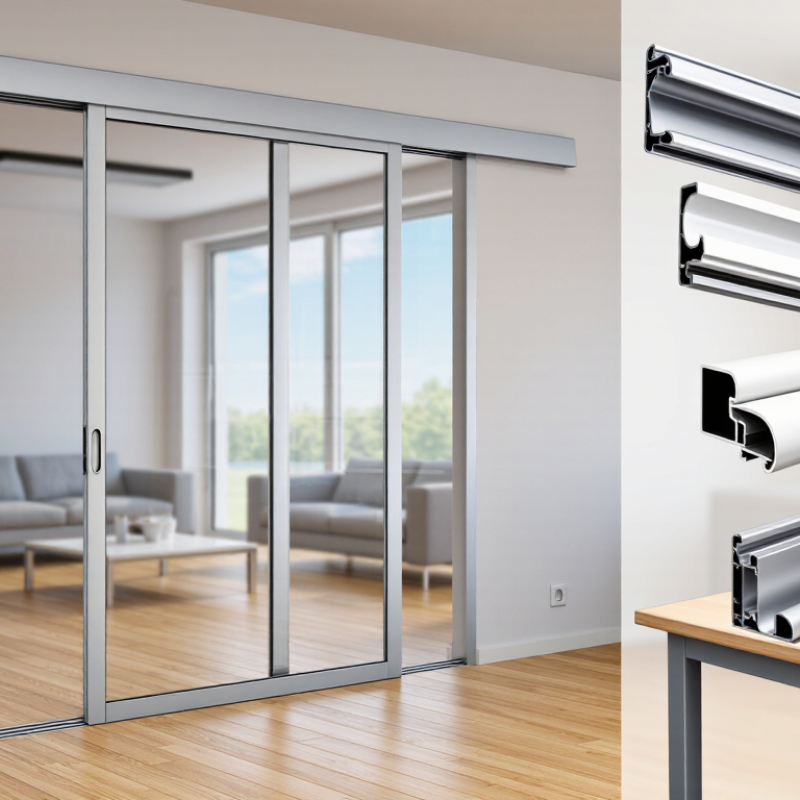
What Are Aluminum Sliding Door Profiles?
Aluminum sliding door profiles are the shaped aluminum sections that form a door’s frame, tracks, sash, and meeting edges. They are not the glass itself. Instead, they hold the glass securely and guide the panels during opening and closing. A typical system includes an upper frame, lower track, side jambs, rollers, gaskets, and drainage paths.
Aluminum is widely used because it is light, rigid, corrosion-resistant, and easy to extrude into accurate shapes. The profile’s wall thickness affects strength and weight. Thermal-break profiles use an insulating strip between the interior and exterior aluminum sections. This reduces heat transfer, although glass quality and installation also matter. A strong profile cannot fix poor sealing.
During supplier evaluations, I check the alloy, temper, profile dimensions, surface treatment, and extrusion tolerance. I also examine sample joints and run the rollers by hand. Smooth movement matters. The lower track should resist water buildup, while drainage holes must remain clear after installation. Powder coating and anodizing can improve appearance and surface protection, but neither replaces correct maintenance.
In real projects, the first specification is rarely perfect. A narrow profile may look elegant, yet it can flex under heavy glass. A thicker design may perform better but reduce the visible opening. Suppliers should provide section drawings, test data, coating details, and packaging information. Small gaps in these documents deserve attention. They often become larger problems on site.
How to Evaluate China’s Top Aluminum Profile Suppliers
Evaluating China’s leading aluminum sliding door profile suppliers requires more than comparing prices. Start with alloy grade, extrusion accuracy, wall thickness, and profile weight. Request recent inspection records, not generic brochures. A reliable supplier should explain its testing process clearly. Ask for samples cut from current production, then check dimensions with calipers. Small deviations can affect rollers, seals, and door alignment.
Factory capability matters. Review extrusion presses, die maintenance, powder coating lines, anodizing controls, and storage conditions. During a factory visit, inspect bundled profiles for scratches, moisture marks, and inconsistent colors. Ask how rejected materials are separated.
Confirm production capacity against your seasonal demand. A low quoted price may hide longer lead times or weaker packaging. That risk deserves careful calculation.
Communication is another practical test. Request drawings, tolerances, finish samples, packaging photos, and a written quality agreement. Check whether engineers respond with measurements instead of vague promises. Independent audits and customer references can strengthen supplier credibility, but they are not perfect evidence. I would also compare payment terms, tooling costs, replacement procedures, and shipping documents. No supplier is flawless. One overlooked detail, such as inadequate corner protection, can damage an otherwise excellent shipment. Allow time for pilot orders and keep records of every correction.
China’s Top 10 Aluminum Sliding Door Profile Suppliers
China’s Top 10 Aluminum Sliding Door Profile Suppliers are usually judged by more than catalog size. In real sourcing work, I check alloy consistency, extrusion tolerance, surface treatment, and technical support. Profiles made from 6063-T5 or 6063-T6 aluminum often suit residential sliding doors. However, the correct grade depends on span, glass weight, climate, and local building requirements.
The strongest suppliers among China’s top ten typically provide complete drawings, sample sections, and documented quality checks. Their anodized or powder-coated finishes should show even color, clean corners, and reliable adhesion. Ask for wall-thickness measurements, coating reports, and corrosion-test records. Small details matter. A smooth roller channel can reduce noise and improve service life. Strong packaging also prevents scratches during long-distance shipping. Some suppliers offer custom dies, thermal-break options, mosquito-screen tracks, and matching handles. That flexibility can shorten installation time.
Price alone is a weak ranking method. I have seen attractive quotations change after tooling, packing, and accessory costs appear. No ranking is perfect. A supplier with advanced equipment may still communicate poorly or miss delivery dates. Request a trial batch before placing a large order. Compare sample tolerances, corner joints, drainage paths, and assembly instructions. Independent inspection is useful when project volumes are high. The best choice should balance engineering ability, production capacity, transparent documents, and responsive after-sales support.
How to Choose the Right Supplier for Your Project
China Top 10 Aluminum Sliding Door Profile Suppliers?
Choosing the right supplier matters more than finding the lowest quotation. Start with the alloy grade, profile drawings, wall thickness, and dimensional tolerance. Ask for recent test reports and production samples. A reliable supplier should explain extrusion, surface treatment, packaging, and inspection procedures clearly. Request a sample corner, not only a loose profile. It reveals fit, finish, and assembly problems quickly.
Tips: Compare complete costs, not unit prices. Check tooling fees, minimum order quantities, delivery schedules, and replacement policies. Visit the factory online or in person when possible. Review evidence of similar projects, but verify references independently. Confirm whether the supplier can maintain consistent color across different production batches. Communication speed also matters when drawings change.
A practical lesson is easy to miss: attractive finishes may hide weak profile walls or poor machining. I once saw a sample that looked excellent but failed during repeated sliding tests. That mistake cost time. Build a simple evaluation sheet and score quality, capacity, responsiveness, and after-sales support. The best supplier may not offer the cheapest bid. It should provide traceable quality records, stable production, and realistic promises. Leave room for uncertainty. Production conditions can change. Ask how the supplier handles defects before signing an order.