
Choosing a Waterproof ATV Sound Bar is not only about louder music on the trail. It is about surviving mud, rain, vibration, dust, and sudden temperature changes. A reliable model should match your ATV’s size, electrical system, and riding conditions. The wrong choice may sound impressive in a store but fail after one wet weekend.
These seven tips focus on practical details that riders often overlook. Check the product’s water-resistance rating, enclosure design, speaker materials, mounting hardware, and control options. Marine-grade components can help, but “waterproof” is not always a universal promise. Look for clear testing information and a dependable warranty. Inspect the wiring, too. Loose connectors and poorly sealed cables can create trouble when water reaches the dashboard or battery.
Sound quality deserves a real-world test. Bass may feel strong in a garage but disappear beside a roaring engine and open fields. Consider Bluetooth stability, volume control, battery load, and whether the bar remains secure on rough ground. I have found that simple mounting brackets often outperform complicated ones, although every ATV frame is different. That detail is easy to miss. A careful buyer should measure the available space before ordering. These tips cannot remove every risk, but they can make your decision more informed, safer, and better suited to actual trail use.
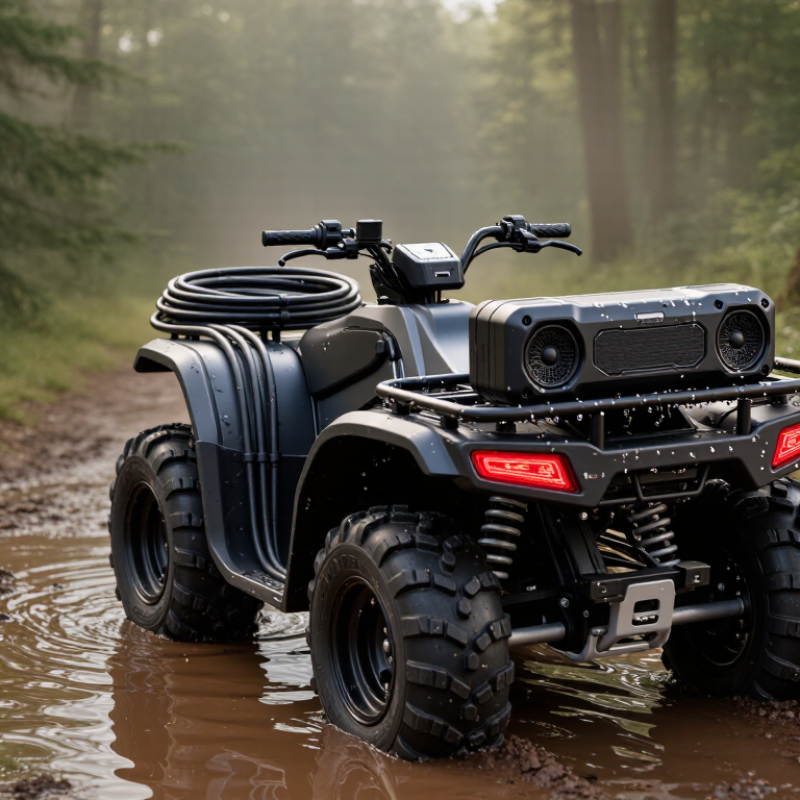
Choosing a waterproof ATV sound bar starts with your riding environment. Mud, spray, dust, vibration, and sunlight can damage equipment quickly. Think about your usual trails, not an ideal weekend. A dry forest path needs less protection than a muddy river crossing. Your requirements should match real conditions.
Check the product’s published water-resistance rating carefully. An IP rating can show protection against dust and water, but it does not explain every riding situation. IPX6 may handle powerful water jets, while IPX7 usually covers temporary immersion. These tests have limits. They may not represent repeated vibration, pressure washing, or salty coastal air. Look for sealed controls, protected connections, UV-resistant housing, and corrosion-resistant mounting hardware. Ask whether the rating applies to the complete sound bar, not only its speaker grille.
Durability also depends on installation. I once saw a well-sealed unit fail because its cable connector faced upward. Water collected there after rain. Small details matter. Mount the sound bar firmly, but avoid crushing its brackets or enclosure. Check for rattling after several rides. Inspect seals, wiring, and fasteners every few weeks. Clean off mud with low-pressure water, then let the unit dry naturally. High-pressure spray can force water past seals. That mistake is easy to make. A realistic choice may sacrifice maximum volume for stronger sealing and better physical protection. Your trail habits should decide the balance.
Choosing a waterproof ATV sound bar begins with the riding environment, not the loudest specification. A quiet woodland trail needs balanced mids and clear vocals. Open fields demand stronger output because wind and engine noise quickly absorb detail. From weekend trail tests, I learned that maximum volume can create harsh sound before useful sound. That lesson is easy to miss.
Tip 1: Match power to terrain.
Tip 2: Choose clean output over exaggerated bass. Moderate power may preserve battery life on slower rides.
Tip 3: Check the controls before installation. Gloves, dust, and vibration make tiny buttons frustrating. Look for simple volume control, stable Bluetooth, and quick track adjustment.
Tip 4: Examine the water-resistance rating and protected ports. Sealing alone does not guarantee dependable performance. Corrosion-resistant hardware also matters.
Tip 5: Test connection range around the parked ATV, then repeat the test while moving. Real conditions expose weaknesses. Keep it practical.
Tip 6: Select features that suit your route. A built-in microphone may help with calls, but it can distract riders on technical sections. Equalizer controls are useful when helmets, terrain, or engine noise change the sound profile.
Tip 7: Inspect the mounting system carefully. Rattling brackets can damage comfort and audio clarity.
Do not choose deep bass automatically. It may drain power and blur vocals at high volume.
I still think some compromise is healthy. The perfect sound bar rarely exists.
7 Tips for Choosing a Waterproof ATV Sound Bar
Power, battery life, and ATV compatibility deserve more attention than maximum volume. The automotive audio market is projected to grow at roughly 6% annually through 2030, according to Grand View Research’s 2024 market report. That growth brings many inflated power claims. Check continuous RMS power, not peak watts. A 12-volt sound bar drawing 8 amps uses about 96 watts while operating. Your ATV’s alternator must support that load without weakening the starting battery. Loud trails demand more power.
Battery capacity matters too. A 10 Ah battery at 12 volts stores about 120 watt-hours in ideal conditions. Amplifier losses, cold weather, and high volume reduce usable energy. Expect less runtime than the packaging suggests. IEC 60529 defines IPX5 as protection against water jets and IPX7 as temporary immersion. Neither rating guarantees long-term protection from mud, vibration, or poor charging habits. I once trusted an impressive rating and ignored the charging connector. That was careless.
Compatibility is practical, not cosmetic. Confirm the sound bar’s mounting width, clamp diameter, wiring length, and clearance around handlebars. Check whether it accepts your ATV’s voltage range and includes an appropriate fuse. Bluetooth connection stability also matters when the vehicle shakes over rough ground. The Consumer Technology Association notes that portable audio demand increasingly favors wireless convenience, but wireless features still consume power. Test the controls with gloves. Test them again in rain. A perfect specification can fail on a muddy afternoon.
Compare practical specification benchmarks for power, battery life, waterproofing, and ATV compatibility.
Look for at least 50 W RMS for outdoor listening, 8 hours of battery life for extended rides, IP66 or higher protection, and compatibility with a 12 V ATV electrical system.
Choosing a waterproof ATV sound bar requires more than checking its audio power. The mounting system must match your roll cage diameter and available space. Measure twice, especially near the windshield, roof, and passenger seat. A rigid clamp reduces vibration on rough trails. Rubber inserts can protect painted tubing and improve grip.
Check whether the bar supports horizontal, vertical, or adjustable mounting. Adjustable brackets help direct sound toward the riders, not the rear cargo area. Leave clearance for suspension movement and routine cleaning. The unit should not block lights, mirrors, or emergency controls. Waterproof ratings matter, but they do not always mean safe underwater use. Keep connectors facing downward when possible.
Controls should remain usable with gloves and muddy fingers. Large buttons are usually more practical than tiny touch panels. A wired remote can help if the main controls sit above your head. Bluetooth pairing is convenient, although wet gloves make phone controls frustrating.
Plan the installation before drilling. Trace the cable path, protect wires from sharp edges, and secure them away from hot engine parts. Use sealed connectors and an inline fuse sized for the manufacturer’s instructions. I once underestimated cable slack, and the final connection looked untidy. That mistake changed my installation checklist. Allow extra length, but avoid loose loops. Test charging, volume, pairing, and every mounting point before the first trail ride.
7 Tips for Choosing a Waterproof ATV Sound Bar
Safety should guide every comparison, not volume alone. The World Health Organization’s 2022 safe-listening standard recommends 80 dB for up to 40 hours weekly for adults. Choose a model with a wired or wireless volume control, secure mounting, and clear controls you can use without leaving the trail. A loose unit can become a dangerous distraction. Check the enclosure’s IP rating under IEC 60529. IPX6 resists powerful water jets, while IPX7 covers temporary immersion. Neither rating guarantees protection from mud, vibration, or saltwater.
Maintenance affects real value. Rinse dried mud with fresh water, then dry connectors before storage. Avoid pressure-washing seals and speakers. Inspect mounting hardware after rough rides. Small cracks often appear before failure. The Consumer Product Safety Commission has reported more than 100,000 ATV-related emergency-department injuries in some recent annual estimates, so stable installation deserves serious attention. This statistic does not measure sound-bar accidents, but it reinforces careful trail preparation.
Warranty terms reveal more than advertising language. Compare coverage length, water-ingress exclusions, battery limits, labor costs, and return shipping. Ask whether vibration damage requires special installation. A longer warranty is not automatically better. Reviewers and industry testing can miss long-term corrosion. Calculate total value using purchase price, mounting parts, maintenance supplies, and expected replacement risk. I would accept slightly lower output for stronger seals and simpler servicing. That choice is less exciting, but usually more practical.
| No. | Buying Tip | Key Dimension | Minimum Benchmark | Preferred Target | What to Check | Value Weight |
|---|---|---|---|---|---|---|
| 1 | Confirm the Waterproof Rating | Ingress protection level | IP65 for protection against dust and water jets | IP67 or higher when temporary immersion protection is important | Check the complete IP code, test conditions, port-cover design, and whether the rating applies to the entire sound bar. | 20% |
| 2 | Prioritize Safe Installation | Mounting security and electrical protection | Secure brackets, protected wiring, and an in-line fuse | Vibration-resistant hardware, strain relief, sealed connectors, and a clearly specified fuse | Look for adjustable brackets, locking fasteners, cable clearance, polarity protection, and instructions for routing wires away from heat and moving parts. | 20% |
| 3 | Match Power to the Riding Environment | Continuous audio output and efficiency | A published RMS output rating rather than peak power only | Efficient amplification with low distortion at the intended listening volume | Compare RMS power, speaker sensitivity, distortion figures, and current draw. Higher wattage alone does not guarantee better sound or safer operation. | 15% |
| 4 | Check Controls and Connectivity | Wireless range, wired inputs, and control access | Reliable wireless pairing plus at least one protected auxiliary or USB input | Weather-resistant controls, memory for paired devices, and easy operation with gloves | Verify connection stability, button size, volume control placement, input-cover sealing, and whether controls can be used without distracting the rider. | 10% |
| 5 | Evaluate Maintenance Requirements | Cleaning, drainage, and corrosion resistance | Sealed housing, corrosion-resistant fasteners, and accessible drainage paths | UV-resistant materials, stainless or coated hardware, replaceable grilles, and simple cleaning instructions | Confirm that the manual explains rinsing, drying, storage, connector care, and inspection after mud, salt, or deep-water exposure. | 10% |
| 6 | Read the Warranty Carefully | Coverage period and exclusions | At least 12 months with written terms and a documented claim process | Longer coverage with parts, labor, water-ingress terms, and accessible repair support | Check exclusions for incorrect installation, commercial use, saltwater, physical impact, modified wiring, and failure to close protective covers. | 15% |
| 7 | Calculate Overall Value | Total ownership cost and useful features | Price is supported by verified waterproofing, safe installation parts, and usable warranty coverage | Balanced performance, durable construction, low maintenance, and readily available replacement parts | Estimate purchase price plus installation, wiring, replacement parts, maintenance, and possible downtime over the expected service life. | 10% |
| Total Evaluation Weight | 100% | |||||
Note: IP ratings are defined under IEC 60529. IP65 indicates dust protection and protection from water jets, while IP67 includes protection against temporary immersion under specified test conditions. Always follow the product manual for installation, cleaning, and warranty requirements.