


Choosing a Self‑Locking Winding Air Duct is not just a matter of matching a diameter. Airflow, operating pressure, temperature, installation space, and maintenance access all shape the decision. The U.S. Department of Energy’s Energy Saver guidance estimates that typical homes can lose 20%–30% of conditioned air through duct leaks and poorly connected sections. That figure is a useful warning, not a product rating. Small details matter. An undersized run can increase resistance, while a loose joint can waste conditioned air before it reaches a room. Fit is everything.
Professional references help turn these risks into practical checks. ASHRAE’s Handbook—HVAC Systems and Equipment addresses duct-system design, while SMACNA’s HVAC Duct Construction Standards—Metal and Flexible provides construction guidance. For a winding duct, buyers should verify the stated material, locking-seam integrity, diameter tolerance, pressure rating, temperature range, and any insulation or corrosion protection. Ask suppliers for test documentation and installation instructions, then compare them with the actual fan and duct route. In commercial settings, airflow balance and inspection access deserve equal attention. Not always. Product descriptions rarely show how a duct performs after repeated handling, tight bends, or site-specific fitting. A careful choice weighs verified specifications against the real installation, rather than relying on a catchy label or one headline number. That distinction matters.
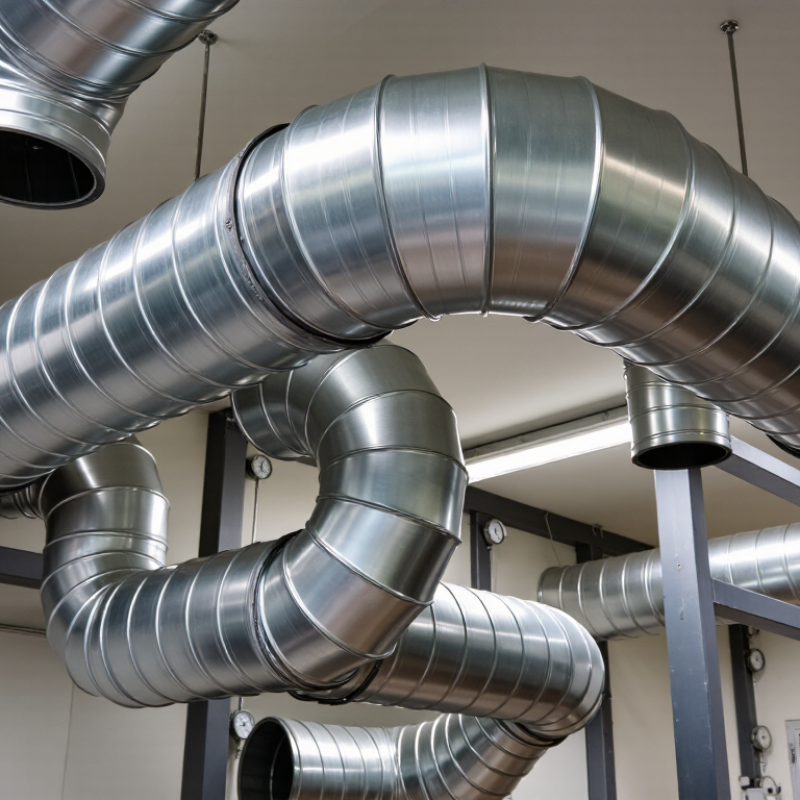
A self-locking winding air duct is formed from a narrow metal strip wound into a spiral. The strip’s edges fold together and lock, creating a continuous seam along the duct. That seam holds the shape while allowing the duct to bend around obstacles. Many designs use galvanized steel or aluminum, but material choice depends on the air, moisture, and operating temperature involved.
The structure affects how the duct performs. A tight winding can resist crushing better, while a flexible wall helps with awkward routes. Flexibility has limits. Sharp bends may restrict airflow, and excessive pulling can loosen or deform the seam. Measure the required diameter and route before choosing; a duct that looks suitable on a shelf may be difficult to install in a cramped ceiling. Check the stated pressure range, temperature limits, and corrosion resistance for the actual application. During installation, inspect the seam and joints for gaps, especially near bends. One detail is easy to miss: a self-locking wall does not automatically make every connection airtight. I would also allow more room than the drawing suggests, since real supports and corners rarely line up perfectly.
| Selection Factor | Structure or Function | What to Check | Practical Selection Guidance |
|---|---|---|---|
| How the duct is formed | A strip of sheet metal is wound into a spiral tube. Its edges engage in a continuous locking seam that holds the tube together. | Check that the seam is consistently formed, without gaps, sharp protrusions, or visible damage. | Choose a duct with a sound, even seam suited to the expected handling and operating conditions. A locked seam does not automatically make the duct airtight. |
| Duct diameter | The internal diameter affects airflow area and the air velocity needed to deliver a given airflow. | Confirm the required airflow, available space, connection size, and acceptable pressure loss. | Match the duct diameter to the system design and connected equipment. Avoid selecting a size solely because it fits the available opening. |
| Metal material | Common options include galvanized steel, aluminum, and stainless steel. Material affects weight, corrosion resistance, and temperature suitability. | Consider moisture, corrosive exposure, temperature, mechanical wear, and applicable project requirements. | Use galvanized steel for many general-purpose applications, aluminum where lower weight is useful, and stainless steel where the environment requires greater corrosion resistance. Verify the grade and suitability for the specific service. |
| Wall thickness and rigidity | The metal strip forms the duct wall; its thickness and construction influence stiffness, durability, and resistance to deformation. | Check product specifications against handling loads, support spacing, operating pressure, and installation conditions. | Do not assume that all ducts of the same diameter have the same strength. Select thickness and construction using the supplier’s technical data and the system design. |
| Airflow and pressure | The duct conveys air; friction at the wall and losses at bends, transitions, and connections affect system performance. | Confirm the intended airflow direction, operating pressure, duct length, fittings, and any fan or equipment limits. | Use pressure-loss data for the actual duct and layout where available. Do not infer a pressure rating from the self-locking seam alone. |
| Leakage and sealing | The spiral seam is a mechanical interlock. Airtightness depends on duct construction, joints, fittings, and any sealing method used. | Check the required leakage class or project specification, as well as the connection and sealing details. | For applications with defined leakage requirements, select a product tested or specified for those requirements and seal joints as directed by the system design. |
| Flexibility and installation route | Wound metal ducting can follow a curved route to a degree, but it is not equivalent to a flexible fabric or foil duct. | Review bend radius, obstructions, support locations, access for maintenance, and the manufacturer’s installation guidance. | Plan smooth bends and suitable supports. Avoid crushing, kinking, or forcing the duct into a tight turn, which can restrict airflow or damage the wall and seam. |
| Connections and accessories | Compatible collars, couplings, clamps, or other fittings connect the duct to equipment and adjoining duct sections. | Confirm that connection dimensions and materials are compatible and that joints can be secured and sealed as required. | Specify connection details along with the duct. A well-made duct can still perform poorly if its joints are loose, misaligned, or inadequately sealed. |
| Operating environment | Temperature, humidity, contaminants, outdoor exposure, and cleaning methods can affect material life and suitability. | Check the product’s documented temperature limits and compatibility with the conveyed air and surrounding environment. | Choose materials and protective measures for the actual service conditions. Request technical documentation when exposure or temperature is outside ordinary indoor ventilation use. |
| Final specification check | A suitable choice balances airflow, dimensions, material, mechanical needs, installation constraints, and applicable requirements. | Confirm diameter, material, thickness, length, connection type, performance data, and any required test or compliance documentation. | Compare complete specifications rather than price or appearance alone, and verify that the selected duct is suitable for the project before ordering. |
Note: Product dimensions, pressure limits, temperature limits, and leakage performance vary by construction and supplier. Use the technical data for the specific duct and follow applicable system-design and installation requirements.