7 CNC Multifunctional Side Hole Drill Buying Tips
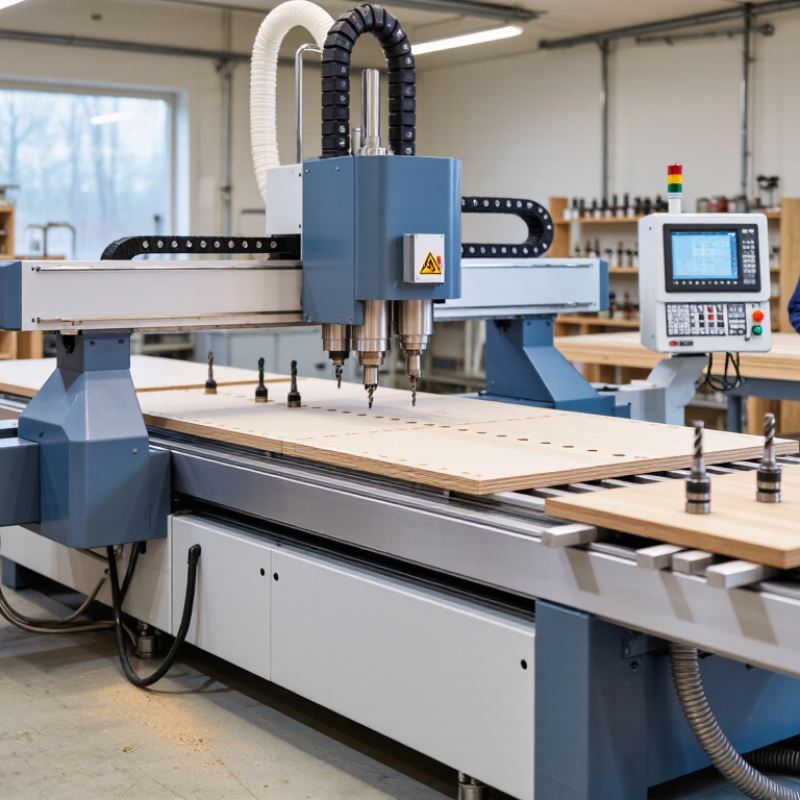
Choosing a CNC Multifunctional Side Hole Drill is not simply a matter of comparing prices. The right machine must match your panels, production volume, workshop layout, and operator experience. A cabinet factory may need rapid drilling for dowels, hinges, and connectors. A smaller shop may value flexible setup and easier maintenance instead. These differences matter.
This guide presents seven practical buying tips based on common workshop conditions and equipment evaluation experience. Pay attention to spindle power, drilling accuracy, table stability, clamping performance, software compatibility, dust extraction, and after-sales support. A rigid frame should remain steady during repeated side drilling. The control system should also make corrections clear, not confusing. Small details count. For example, poorly positioned clamps can leave marks on finished boards. Weak dust collection can quickly cover sensors, guides, and operators’ hands.
Ask the supplier for sample results using your actual board materials. Test melamine panels, plywood, or solid wood if they are part of your production. Request information about tolerances, drill-bit sizes, maintenance intervals, and replacement parts. Do not rely on attractive videos alone. They may show ideal conditions.
There is no perfect machine for every workshop. An expensive model can still be unsuitable. A lower-cost machine may perform well when its limits are understood. Review the machine carefully, discuss realistic workloads, and leave room for technical support. This approach helps turn a complicated purchase into a more dependable long-term decision.
Match Materials and Hole Sizes to Torque, Feed Rate, and Drill Capacity Data
7 CNC Multifunctional Side Hole Drill Buying Tips
When buying a CNC multifunctional side hole drill, match the material before comparing features. Aluminum cuts easily, while stainless steel demands higher torque and stable feed control. Hardened steel needs stronger spindle capacity and careful heat management. Check the machine’s torque curve, not only its advertised motor power. A powerful motor may still lose torque at low speed.
Hole size matters just as much. Small holes require precise runout control and suitable high-speed settings. Larger holes create greater cutting resistance and may need slower feed rates. Compare the required diameter with the drill’s rated capacity, spindle speed range, and chuck specifications. Leave working margin. Operating at the maximum capacity every day can shorten tool life.
In practical shop testing, I record spindle load, cutting sound, and hole accuracy across several materials. A clean, round hole is more useful than a fast cycle time. Match feed rate to drill diameter, flute design, and material hardness. Use coolant when heat builds near the side opening. I once selected a drill based on capacity alone, then found excessive vibration on deep holes. That mistake changed my inspection checklist. Measure entry and exit edges, too. Side drilling can produce unexpected burrs when support is weak. Review technical data, conduct a sample cut, and confirm repeatability before committing to a purchase.
Evaluate Multi-Side Automation with ISO 230-2 Accuracy and Cycle-Time Metrics
Buying a CNC multifunctional side hole drill requires more than counting spindles or advertised speeds. Evaluate how reliably the machine reaches several faces without manual repositioning. ISO 230-2 testing can reveal positioning accuracy and repeatability under defined conditions. Request the complete test method, temperature range, axis travel, and measurement results. A single accuracy number is not enough. It may hide thermal drift or fixture errors.
Tip 1: Compare cycle-time measurements from identical parts. Include loading, clamping, indexing, drilling, tool changes, probing, and chip removal. Ask for timed footage or a supervised trial. Automation often looks fast until the operator clears chips or corrects alignment. Measure five or more cycles. The average matters, but variation matters too.
Tip 2: Inspect multi-side access closely. Check whether the fixture blocks holes, causes vibration, or requires awkward tool angles. Confirm that automatic indexing maintains the stated tolerance after repeated movements. My practical bias is to trust a production trial more than a polished specification sheet. Still, one trial can mislead if the material, tooling, or operator differs. Record those conditions carefully.
Tip 3: Review maintenance data before purchase. Ask how accuracy is verified after service and how cycle-time changes are tracked. A machine may meet ISO 230-2 results in a controlled test, yet perform differently beside a warm cutting line. That gap deserves attention.
7 CNC Multifunctional Side-Hole Drill Buying Tips
Compare multi-side automation, ISO 230-2 positioning accuracy, and representative drilling cycle-time metrics before selecting a machine.
Lower cycle time and positioning error indicate stronger productivity and precision. “Automated sides” counts the number of workpiece faces that can be processed without manual repositioning. Accuracy values represent bidirectional linear positioning error assessed using ISO 230-2 principles; confirm final results with an on-site acceptance test.
Compare Coolant Systems, Chip Control, and 10,000–24,000 rpm Spindles
7 CNC Multifunctional Side Hole Drill Buying Tips
Buying a multifunctional side hole drill requires more than checking spindle speed. On busy shop floors, coolant behavior and chip removal often decide uptime.
Check 1: Compare coolant delivery.
Air cooling suits dry wood and many composite panels, while liquid systems help control heat during extended cutting. Confirm filtration, drainage, corrosion protection, and maintenance access before choosing. A complicated system may perform well but frustrate operators every morning.
Check 2: Inspect chip control around the side drilling unit.
Look for air blast ports, extraction connections, guarded chip paths, and enough clearance for curled chips. Chips reveal problems. Poor evacuation can scratch finished panels, overload tools, or trigger repeated stops.
Check 3: Match the spindle range to the material and cutter diameter.
A 10,000 rpm spindle may provide useful torque for larger tools, while 24,000 rpm supports smaller cutters and cleaner edges. Higher speed is not automatically better.
Check 4: Ask how torque changes across the 10,000–24,000 rpm range.
Check 5: Confirm collet accuracy, runout, and tool-length measurement.
Check 6: Test coolant and extraction controls together, not separately.
Check 7: Review service access, spare parts, training, and noise levels.
I once underestimated access panels; a simple cleaning task became an avoidable delay. That experience changed my buying checklist.
Request cutting samples using your real panel thickness, hole depth, adhesive content, and production cycle. A specification sheet cannot reveal every clog, vibration, or wet-workflow inconvenience.
Calculate Total Cost Through Tool Life, Energy Use, Warranty, and Payback Data
7 CNC Multifunctional Side Hole Drill Buying Tips
Calculate Total Cost Through Tool Life, Energy Use, Warranty, and Payback Data
A low purchase price can hide expensive operating habits. Ask for tool-life data based on your material, hole diameter, feed rate, and daily workload. A cutter lasting 8,000 holes may cost less than one lasting 12,000 holes if replacement parts are expensive. Request test records, not optimistic estimates.
Measure energy use during drilling, standby, dust extraction, and compressed-air operation. A simple power meter can reveal surprising costs. Multiply measured kilowatts by operating hours and your local electricity rate. Include labor for setup, bit changes, cleaning, and unplanned adjustments. These small minutes accumulate quickly. My first estimate ignored setup time and overstated the expected savings.
Read the warranty carefully. Check coverage for spindles, motors, control systems, and wear-related failures. Confirm response times, replacement-part availability, and technical support responsibilities. A longer warranty is not automatically better if exclusions are broad. Calculate payback using realistic monthly production, maintenance costs, financing charges, and downtime risk. Compare conservative, expected, and best-case results. If the machine pays back in 18 months only under perfect conditions, the investment needs more review. Keep the calculation transparent, and update it after three months of actual use.