
Learn More With Our

Blog

How to Choose the Right Ozone Sensor?

Choosing the right Ozone Sensor requires more than comparing prices or advertised detection ranges. In a treatment room, a greenhouse, or an industrial exhaust line, measurement conditions can change quickly. Humidity, temperature, airflow, and interfering gases may affect readings. A sensor that performs well in clean laboratory air might respond poorly near solvents or dust. The right choice depends on the application, required accuracy, response time, and acceptable maintenance schedule.

Reliable selection begins with evidence. Check the sensor’s measurement range, detection limit, response time, operating temperature, and calibration requirements. Electrochemical sensors often suit portable monitoring, while ultraviolet absorption instruments can support demanding continuous measurements. However, each technology has limitations. No sensor is perfect. A practical evaluation should include field trials, comparison with a traceable reference instrument, and regular calibration records. Small details matter, such as whether the probe sits beside a ventilation outlet or inside a stagnant corner.

Experience also reveals inconvenient truths. A low-cost Ozone Sensor may appear economical, yet frequent replacement can increase ownership costs. A highly sensitive model may create unnecessary alarms when environmental interference is ignored. Manufacturer documentation, independent test data, and recognized measurement guidance can strengthen confidence. Qualified technicians should review installation, maintenance, and data quality procedures. This guide explores these factors carefully, helping readers choose an Ozone Monitoring solution that is accurate, durable, and appropriate for real operating conditions. Some decisions remain uncertain, and that uncertainty deserves honest attention.
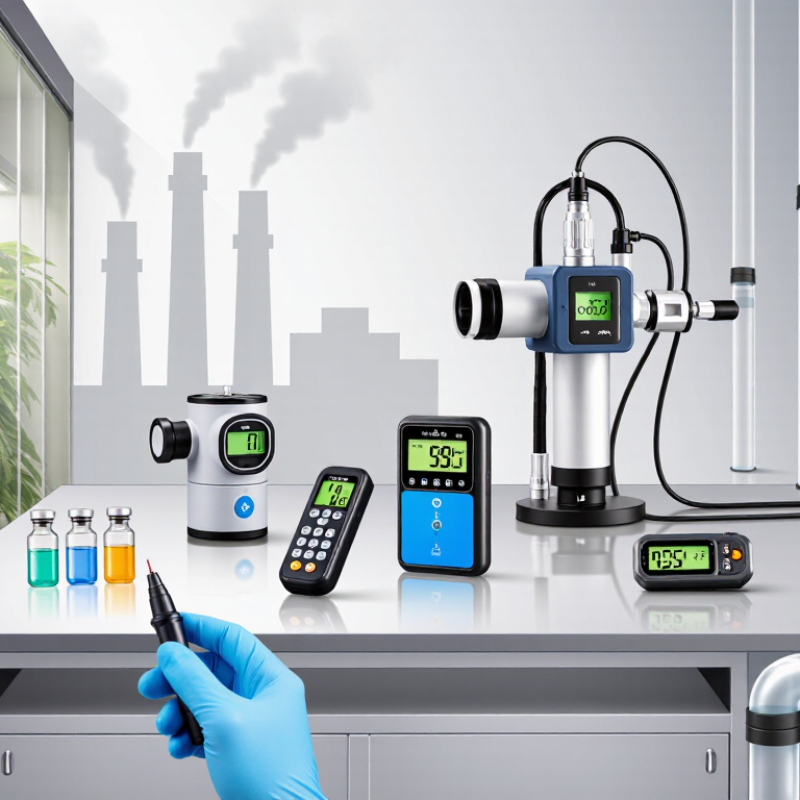
How to Choose the Right Ozone Sensor?

Define the Target Range: EPA’s 0.070 ppm and WHO’s 100 µg/m³ Limits

Before choosing an ozone sensor, define the concentration range you need to measure. The EPA uses 0.070 ppm as an eight-hour outdoor ozone standard. The WHO guideline is 100 µg/m³ for an eight-hour peak-season average. These values are not identical units. At 25°C and standard pressure, 100 µg/m³ equals approximately 0.051 ppm. Temperature and pressure can change this conversion slightly.

Do not select a sensor that only reaches the limit. A practical instrument should measure below the target and provide headroom above it, such as a 0–0.200 ppm range. Resolution matters near the threshold. A display changing by 0.001 ppm is more useful than one changing by 0.01 ppm. Check the stated accuracy, response time, detection limit, and eight-hour averaging function. A fast sensor may show short spikes, while compliance decisions often depend on longer averages.

Placement also affects the reading. Avoid direct sunlight, strong airflow, and nearby ozone-generating equipment unless those conditions are part of the test. Humidity can interfere with some sensing technologies. Calibration is essential.

Small errors matter.

A common mistake is comparing a live reading directly with an eight-hour limit. That comparison can mislead. Record time-stamped data, verify the unit conversion, and review the sensor’s calibration date. I would also question unusually stable readings, because real indoor environments rarely remain perfectly constant.

Match Sensor Technology to Ozone Levels from ppb Ambient to 5 ppm IDLH

How to Choose the Right Ozone Sensor?

Choosing an ozone sensor starts with concentration, not convenience. Ambient monitoring may involve levels from a few ppb to several hundred ppb. At these low levels, select a sensor with strong resolution, low drift, and verified humidity compensation. Ultraviolet photometric technology can provide stable measurements, while electrochemical designs may offer practical, lower-cost monitoring. Check the detection limit carefully. A wide range does not always mean better sensitivity.

For industrial protection, the requirement changes near 5 ppm, the IDLH level for ozone. The sensor should measure beyond the alarm point, respond quickly, and support visible and audible alerts. Confirm its upper range, response time, calibration method, and recovery behavior. A sensor that saturates at 1 ppm cannot protect workers at 5 ppm. Cross-sensitivity also matters because nitrogen dioxide, chlorine, and changing humidity may influence readings.

Tips: Match the sensor range to the real exposure scenario. Use a low-level instrument for ambient air and a higher-range instrument for emergency monitoring. Install the inlet near the breathing zone, not beside a vent. Schedule calibration with a traceable reference. A perfect choice is uncommon; field conditions often reveal weaknesses that laboratory tests miss. Review the data regularly, and question results that change suddenly without an operational reason.

How to Choose the Right Ozone Sensor?

Match the sensor technology to the expected ozone concentration, from low-level ambient monitoring in parts per billion (ppb) to high-exposure conditions approaching the 5 ppm IDLH level.

UV photometric sensors are well suited to stable, low-level ambient measurement and can also support higher ranges. Electrochemical sensors are commonly selected for compact workplace monitors, while high-range applications require a sensor specifically rated for concentrations up to 5,000 ppb. The ranges shown are practical selection bands; always verify the certified operating range, cross-sensitivity, response time, and applicable exposure limits.

Select Accuracy, Resolution, and Response Time for Your Monitoring Task

How to Choose the Right Ozone Sensor?

Select Accuracy, Resolution, and Response Time for Your Monitoring Task

Choosing an ozone sensor starts with the monitoring task, not the product label. Indoor air checks, process control, and safety alarms require different performance. Define the decision first. A safety alarm may need rapid response, while trend monitoring may prioritize stable readings over speed.

Accuracy describes how close the reading is to the true ozone concentration. Ask how accuracy changes across temperature, humidity, and the full measuring range. Resolution is the smallest displayed change, but it does not guarantee that change is accurate. An instrument may show 0.01 ppm while its actual error is much larger. That difference matters.

Review calibration records, test conditions, and the stated uncertainty. Traceable calibration and clear maintenance instructions support dependable decisions.

Response time is often listed as T90, meaning the sensor reaches 90 percent of a concentration change. A fast response helps detect sudden peaks, especially near equipment or ventilation outlets. However, aggressive filtering can make a quick sensor appear slow. Long sampling tubes can add delay too. Check the complete setup, not only the sensor head.

A field mistake is choosing the highest resolution, then discovering unstable readings in humid air. Reconsider the environment, sampling method, and alarm delay together. Test the sensor with known concentrations before relying on it for continuous monitoring.

Verify Cross-Sensitivities, Calibration, and OSHA’s 0.1 ppm Exposure Limit

How to Choose the Right Ozone Sensor?

Choosing an ozone sensor starts with the exposure setting, not the product label. In a workplace, OSHA’s permissible exposure limit for ozone is 0.1 ppm as an eight-hour time-weighted average. That number should guide alarm planning, but it is not the only decision point. Short peaks can matter, especially near ozone generators, treatment rooms, or poorly ventilated equipment areas.

Check cross-sensitivities before trusting a reading. Some sensors may respond to nitrogen dioxide, chlorine, or other oxidizing gases. Cleaning chemicals can create confusing results. Ask for interference data under realistic humidity and temperature conditions. A sensor that performs well in dry laboratory air may behave differently beside a damp process line. This is where practical testing helps. Place a temporary monitor nearby and compare readings during normal operations. The comparison may reveal problems.

Calibration deserves equal attention. Use a documented zero check and a certified ozone concentration when performing span verification. Record the gas concentration, date, temperature, humidity, and operator. Ozone is unstable, so calibration gas handling requires care and fresh verification. Follow the sensor’s stated interval, but shorten it after repairs, unusual exposure, or unexplained drift. I have seen teams trust a stable display too quickly. Stability is not proof of accuracy. A useful sensor should also provide clear alarms, fault indicators, and a maintenance history that another qualified person can audit.

How to Choose the Right Ozone Sensor? — Verify Cross-Sensitivities, Calibration, and OSHA’s 0.1 ppm Exposure Limit
Comparison guide for selecting an ozone-monitoring technology for workplace safety, process control, and environmental measurements.
Sensor Technology Measurement Principle Typical Strengths Important Cross-Sensitivities and Interferences Calibration and Verification Considerations Suitability for Detecting 0.1 ppm Ozone
Ultraviolet Photometric Measures ozone absorption of ultraviolet light near 254 nm, where ozone has a strong absorption band. High selectivity for ozone; suitable for continuous monitoring; generally stable for low-level measurements; commonly used for ambient-air and process applications. Interference can occur from particles, condensation, dirty optical cells, lamp aging, and gases or vapors that absorb strongly in the same ultraviolet region. Water vapor is usually less significant than optical contamination. Requires zero-air checks and periodic span verification with a traceable ozone source or comparison instrument. Optical-cell cleanliness, lamp output, sample flow, and scrubber performance should be checked. Excellent when the instrument is specified for sub-ppm ozone and the sample system is properly maintained.
Electrochemical Generates an electrical signal from an oxidation-reduction reaction at an electrode exposed to ozone. Compact, low-power, and often economical; suitable for portable instruments and fixed-point alarms when the sensor is specifically designed for ozone. Response may be affected by nitrogen dioxide, chlorine, chlorine dioxide, sulfur dioxide, nitrogen monoxide, hydrogen peroxide, solvents, high humidity, temperature, and changes in airflow. The exact response depends on electrode chemistry and filters. Zero and span checks are important. Sensor aging, electrolyte condition, temperature, humidity, and storage history can affect accuracy. Use a certified test concentration or a validated comparison method. Good for personal or area monitoring if the manufacturer documents performance at or below 0.1 ppm and provides interference data.
Metal-Oxide Semiconductor Detects changes in the electrical resistance of a heated semiconductor surface caused by reactive gases. Durable, simple, and capable of detecting low concentrations in some applications; may be useful for trend monitoring or leak indication. Usually broad and non-specific. Volatile organic compounds, carbon monoxide, nitrogen oxides, hydrogen, solvents, humidity, temperature, and surface contamination may produce a response. Requires application-specific calibration and environmental compensation. Frequent verification is advisable because baseline drift and poisoning can affect readings. Use with caution for OSHA-related compliance decisions unless selectivity, detection performance, and interference rejection have been independently validated.
Colorimetric or Indicating Tube Ozone reacts with a treated chemical medium, producing a measurable stain or color change. Useful for short-duration screening, personal exposure checks, and independent verification when continuous electronic monitoring is unavailable. Humidity, temperature, interfering oxidants, sampling time, storage conditions, expiration date, and incorrect flow rate can influence the result. Follow the specified sampling volume and flow rate. Confirm expiration date and storage requirements. Use a new tube for each measurement and record sampling duration. Suitable for screening around 0.1 ppm when the tube’s stated range, accuracy, and uncertainty cover the target concentration.
Chemiluminescence or Specialized Optical Analyzer Uses a chemical or optical reaction that produces a signal proportional to ozone concentration. Can provide high sensitivity and fast response for laboratory, research, or reference-level monitoring. Performance can be affected by reagent condition, sample flow, pressure, humidity, optical contamination, and other oxidizing compounds, depending on the design. Requires controlled zero and span procedures, stable sample flow, documented maintenance, and periodic comparison with a traceable reference method. Very suitable when the analyzer is validated for low-level ozone and the additional maintenance requirements are acceptable.
Regulatory reference and selection note: OSHA lists an ozone permissible exposure limit of 0.1 ppm as an 8-hour time-weighted average for covered workplace applications. A sensor reading at or near 0.1 ppm should not be treated as automatically compliant or safe without considering sampling uncertainty, response time, calibration status, cross-sensitivities, and the applicable OSHA standard. For alarm selection, verify the instrument’s stated accuracy and detection capability at the intended alarm level, not only its full-scale range.

Compare Installation, Maintenance, and Certification Costs Before Purchase

How to Choose the Right Ozone Sensor?

Compare Installation, Maintenance, and Certification Costs Before Purchase

A sensor’s purchase price is only the starting point. Installation may require sample tubing, a pump, filters, and a protective enclosure. In a humid treatment room, condensation can distort readings quickly. Keep the sampling line short. Longer tubing increases response time and may collect residue. Technicians should also check airflow, temperature, and power access before installation. These small details often create unexpected labor costs.

Maintenance expenses deserve equal attention. Ask how often the sensor needs calibration, filter replacement, and cleaning. Some models need frequent zero checks in dusty environments. Others may require trained technicians and specialized test gas. Record the expected downtime, not only the parts cost. A low-priced sensor can become expensive after repeated service visits. That calculation is often missed.

Certification costs can vary by application and location. Confirm whether the device needs traceable calibration, electrical safety approval, or an ingress protection rating. Calibration from an ISO/IEC 17025-accredited laboratory may cost more, but it strengthens audit records. Request certificates, uncertainty data, and calibration intervals before ordering. Do not accept vague compliance claims. I would not pretend every installation follows the same budget; field conditions change quickly. A careful comparison should include installation labor, annual maintenance, certification renewals, and possible replacement time.

Article Source:

Top