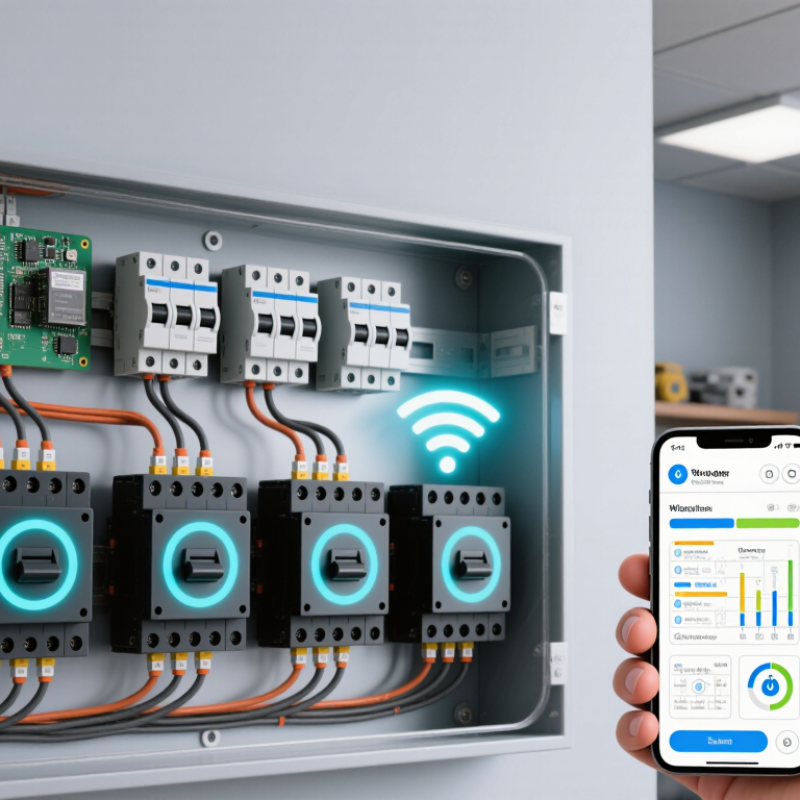
| Definition | A smart WiFi circuit breaker combines a circuit breaker with electronic communication features for monitoring and, on some models, remote switching. | Its core safety function is still to interrupt an electrical circuit when a qualifying fault or overload occurs. |
| Normal operation | When the breaker is on and no trip condition is detected, its contacts remain closed, allowing current to flow to the connected circuit. | The WiFi connection supports data exchange; it does not carry the circuit’s load current. |
| Overload protection | In common thermal-magnetic designs, sustained excess current heats a bimetal element until it releases the trip mechanism. A magnetic mechanism can respond rapidly to very high fault current. | Trip behavior depends on the breaker’s design and rating. WiFi monitoring does not replace the breaker’s protective mechanism. |
| Other fault protection | Some breakers include additional arc-fault or ground-fault detection and trip when the relevant conditions are detected. | These features are not present on every smart breaker; check the device specifications and applicable electrical requirements. |
| Power interruption | When tripped, the breaker’s contacts open and stop current from flowing through the protected circuit. | A trip can interrupt power even if the WiFi network or app is unavailable. |
| WiFi monitoring | Depending on the model, the breaker can send readings or status information, such as current draw, energy use, or a trip notification, to a connected app or system. | Available measurements, alerts, and connectivity requirements vary by model. |
| Remote switching | Some models accept an authorized remote command to open or close the circuit through their control electronics. | Remote switching is model-dependent and is not the same as clearing a fault or resetting a tripped breaker. |
| Restoring power after a trip | First identify and address the likely cause. Then reset the breaker using the procedure specified for that model; some devices may also support a safe, permitted remote reset. | Do not repeatedly reset a breaker that trips again. A persistent trip may indicate a fault requiring qualified electrical attention. |
| Installation and safety | The breaker must be compatible with the electrical panel, circuit, and local requirements, and installed according to its instructions. | Electrical panel work can expose hazardous voltages. Use a qualified electrician where required or if you are not trained to perform the work safely. |