Learn More With Our

Blog

10 Tips for Choosing the Right Road Excavator?

Choosing the right Road Excavator is a practical decision, not a simple horsepower comparison. Global Infrastructure Hub’s Global Infrastructure Outlook estimates a worldwide infrastructure investment gap of about US$15 trillion by 2040. That pressure will increase demand for machines that dig accurately, move efficiently, and withstand demanding road conditions.

The choice becomes more important beside live traffic, drainage trenches, and compact urban work zones. Excavator weight, tail swing, hydraulic flow, and attachment compatibility can change daily productivity. Fuel use matters too. So does transport width. A machine that performs well in a quarry may be awkward on a narrow road project.

Construction equipment researcher Dr. David Gransberg emphasizes that equipment selection should follow production requirements, not purchase price alone. That principle deserves attention. The cheapest excavator can become expensive through delays, idle time, and excessive maintenance. The shortlist is never perfect.

The Association of Equipment Manufacturers also highlights technology, operator productivity, and equipment uptime as major construction priorities. Telematics can reveal idle hours, fuel consumption, and maintenance warnings before small problems become costly interruptions. However, digital features cannot replace a trained operator or a realistic site assessment.

This guide presents 10 practical tips for selecting a Road Excavator. It considers digging depth, operating weight, engine performance, hydraulic capacity, cab visibility, transport needs, service support, and total ownership cost. Local soil conditions matter. Weather matters. Even the distance to a qualified technician can influence the best decision.
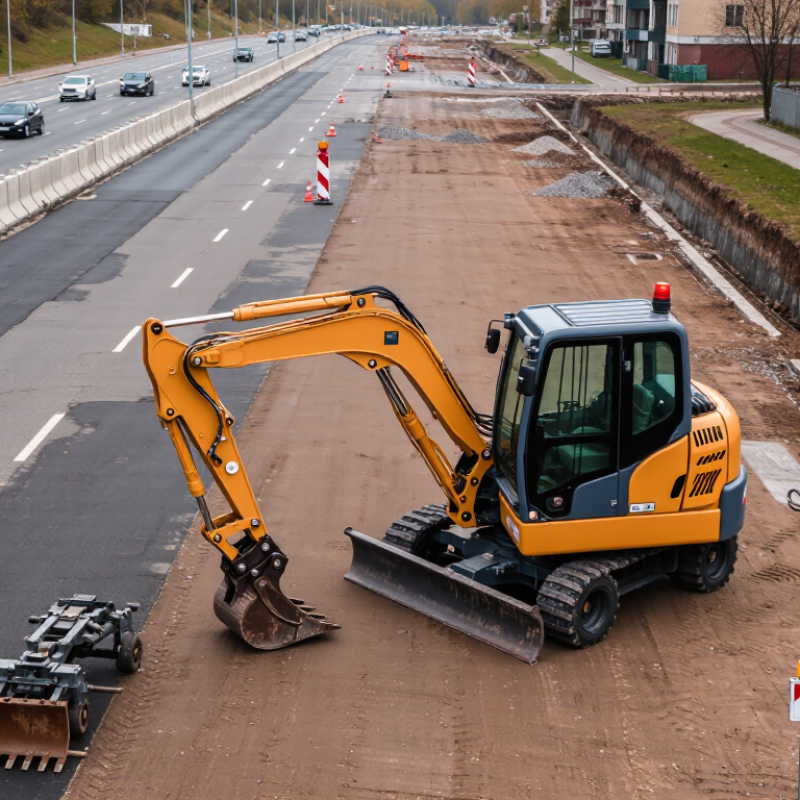
10 Tips for Choosing the Right Road Excavator?

Define the Road Excavator’s Main Job and Working Conditions

Before choosing a road excavator, define its main job in precise terms. Will it remove asphalt, dig drainage channels, prepare shoulders, or handle heavy roadside materials? Each task demands different digging force, attachment compatibility, and hydraulic control. A machine used for narrow utility trenches needs different priorities than one clearing compacted soil beside a highway. Record the expected digging depth, working radius, daily hours, and material type. Small details matter.

Tip: Match the excavator to its most frequent task, not its occasional assignment.

Working conditions can change the correct choice. Check road width, traffic exposure, overhead limits, ground stability, weather, and available turning space. A compact excavator may reduce disruption in confined areas, while a larger unit may provide better reach and productivity on open projects. Measure the work zone before comparing specifications. A brochure cannot show every site problem. One practical mistake is focusing on engine power while ignoring transport access and operator visibility.

Tip: Walk the site first. Take measurements.

Experienced operators also consider vibration, control smoothness, service access, and attachment change time. These factors influence fatigue and daily output. Ask whether the excavator can maintain stable performance on slopes or uneven shoulders. Review maintenance records, inspection procedures, and technical support availability before purchase. Specifications are useful, but field feedback reveals weaknesses that numbers may hide. Reconsider the choice if the machine only fits ideal conditions. Roads rarely stay ideal.

Match Excavator Size, Power, and Reach to the Project

Choosing a road excavator starts with the work, not the machine’s advertised capacity. Measure trench depth, pavement thickness, soil density, and the space around the cut. Match operating weight to ground conditions and transport limits. A heavy excavator can deliver stability, yet it may damage weak shoulders. That detail is easy to miss.

Select hydraulic power according to the bucket, breaker, or compaction attachment. Too little power slows production and increases fuel use. Too much power can overstress attachments and the operator. Check maximum digging depth, vertical wall reach, and loading height before renting or buying. Long reach helps beside traffic barriers, but it reduces lifting confidence at full extension. Keep loads close.

On a recent drainage job, a compact unit fit the lane better than a larger model. However, its limited reach forced extra repositioning. We underestimated that cost. Review cycle time, tail swing, visibility, and undercarriage width with an experienced operator. Ask for rated lift charts, hydraulic specifications, and transport measurements. Confirm the figures against the project drawings. Site conditions can change quickly, so leave practical working room around the stated maximum reach.

Evaluate Mobility, Road Safety, and Site Access Requirements

10 Tips for Choosing the Right Road Excavator?

Choosing the right road excavator starts with mobility, not engine size. On active streets, four-wheel steering can reduce turning space and surface damage. Check the machine’s transport width before visiting the site. A narrow gate may look suitable, yet mirrors or attachments can prevent entry. I have seen operators lose hours because they measured the bucket, but not the counterweight.

Road safety deserves equal attention. Select equipment with clear visibility, reliable lights, warning alarms, and stable braking performance. Confirm that the excavator supports safe travel speeds on public roads and uneven shoulders. Tire condition matters, especially after rain or repeated braking. Keep a written inspection routine for hydraulic leaks, loose steps, and damaged guards. Small defects become serious near traffic. Do not rely only on a sales specification sheet. Ask an experienced operator to review the working conditions.

Site access can change during a project. A machine that enters easily may struggle beside parked vehicles, soft verges, or temporary barriers. Measure turning radius, overhead clearance, ground bearing capacity, and the distance to the work zone. Check whether outriggers can deploy without blocking pedestrians or traffic. A compact model may improve access, but it can reduce lifting reach or digging depth. That trade-off needs honest evaluation. Sometimes, the smaller machine is not the safer choice. Review local road requirements and arrange proper traffic control before mobilization.

10 Tips for Choosing the Right Road Excavator? — Evaluate Mobility, Road Safety, and Site Access Requirements
Tip Evaluation Dimension Recommended Data or Practical Benchmark What to Check Before Selection Why It Matters
1 Operating Weight Select an operating-weight class that matches the work: approximately 1.5–6 tonnes for compact urban work, 6–15 tonnes for general road construction, and above 15 tonnes for heavy excavation. Compare the excavator weight with bridge limits, access-road capacity, transport regulations, and the required digging force. A heavier machine generally provides greater stability and digging performance, but it can increase ground pressure, transport cost, and infrastructure risk.
2 Travel Speed and Mobility For roadable wheeled excavators, a typical maximum travel speed is about 20–35 km/h. Crawler excavators are usually transported rather than driven long distances on public roads. Confirm travel speed, tire or track configuration, steering mode, braking performance, and the distance between work zones. Higher travel speed can reduce relocation time, while suitable steering and braking systems improve control during frequent movement between sites.
3 Road-Legal Configuration The machine should comply with applicable local requirements for width, height, axle load, lighting, mirrors, warning devices, braking, and road registration. Verify the transport width and height with attachments installed, and check whether special permits or escort vehicles are required. A machine that cannot legally or safely travel on public roads may require additional low-loader transport, increasing downtime and operating cost.
4 Overall Dimensions Measure overall length, width, height, tail swing, front swing, and ground clearance. Compact configurations are often preferable on narrow urban roads and confined sites. Measure the narrowest gate, lane, bridge, underpass, and turning point along the complete access route. A machine may fit the work area but still fail at an entrance, bend, overhead obstruction, or restricted road section.
5 Turning Radius and Steering Prioritize a short turning radius, multiple steering modes, and a suitable articulation or axle design when working on narrow roads or around traffic. Assess the minimum turning circle, steering response, counterweight clearance, and ability to reposition without crossing active traffic lanes. Better maneuverability reduces reversing, lane occupation, property damage, and the need for repeated repositioning.
6 Ground Pressure and Surface Protection Use tires, tracks, mats, or wider undercarriage options according to the surface. Soft ground, newly paved roads, and finished shoulders require lower-impact solutions. Review tire or track width, axle load, ground pressure, turning behavior, and the risk of rutting or pavement damage. Lower surface pressure and controlled steering help protect asphalt, sidewalks, drainage edges, landscaped areas, and unfinished shoulders.
7 Visibility and Traffic Safety Choose a cab with clear sightlines, effective mirrors or camera systems, work lights, road lights, audible warnings, and visible beacon equipment where required. Inspect blind spots around the rear, attachment, wheels, and counterweight; confirm the operator can see pedestrians and traffic-control personnel. Improved visibility lowers the risk of collisions, struck-by incidents, and damage to barriers, vehicles, utilities, and roadside assets.
8 Stability and Outrigger Performance For wheeled excavators, verify the stabilizer layout, leveling capability, lifting chart, and allowable operation on slopes. Use the manufacturer’s rated load chart for each configuration. Check the required stabilizer footprint, uneven-ground performance, slope limits, and lifting capacity with the selected boom, dipper, and attachment. Stable support is essential for safe digging, lifting, and loading beside traffic lanes, trenches, embankments, and confined work areas.
9 Attachment Compatibility Match the hydraulic flow, pressure, coupler capacity, attachment weight, bucket width, and breakout force to the planned tasks. Confirm compatibility with buckets, breakers, compactors, grapples, tiltrotators, lifting hooks, and any required quick-coupling system. Correct attachment matching improves productivity and prevents excessive hydraulic load, unstable handling, premature wear, and unsafe lifting.
10 Transport, Fuel, and Site Support Compare fuel or energy capacity, daily operating range, service access, transport method, lifting points, and availability of routine maintenance support. Estimate working hours per shift, refueling or charging access, relocation frequency, service intervals, and emergency-repair response requirements. Reliable support planning reduces idle time and ensures the excavator can complete roadwork without avoidable transport, fueling, or maintenance delays.

Compare Attachments, Fuel Use, Technology, and Operator Comfort

10 Tips for Choosing the Right Road Excavator

Match the attachment to the soil, trench depth, and lifting radius. A hydraulic breaker needs steady flow, not just high engine power. Check quick-coupler compatibility and measure real cycle times.

Choose a bucket that fits the material, rather than the largest bucket available. Compare fuel use during digging, travel, and idling.

The U.S. EPA NONROAD model shows that duty cycle strongly affects off-road equipment emissions. Ask for test data under similar workloads. Idle reduction matters.

Check whether telematics records fuel burn, idle hours, fault codes, and maintenance intervals.

The 2024 Deloitte Engineering and Construction Industry Outlook identifies digital tools as important for controlling productivity and labor pressure. Still, technology can become expensive decoration. Test the interface inside the cab.

Review hydraulic control modes and automatic lubrication options. Examine visibility around the counterweight and trench edge.

NIOSH links whole-body vibration and poor ergonomic design with operator fatigue risks. Select an adjustable seat, low noise levels, simple joystick controls, and effective climate control. Small details matter.

Compare service access, filter replacement time, and parts availability. Consider transport width and road regulations before purchase. No checklist is perfect; muddy sites often expose assumptions that looked reasonable in the office.

Check Maintenance Support, Total Cost, and Long-Term Value

10 Tips for Choosing the Right Road Excavator?

A road excavator should be judged by lifetime cost, not purchase price alone. Compare fuel use, scheduled servicing, tire wear, hydraulic oil, financing, insurance, resale value, and expected utilization. Ask for a five-year total-cost worksheet. Include transport between sites. It is often forgotten.

Maintenance support deserves careful checking. Request local technician coverage, parts availability, emergency response times, warranty limits, and digital service records. Ask whether technicians can diagnose hydraulic faults remotely. The U.S. Department of Energy’s Operations & Maintenance Best Practices Guide reports that predictive maintenance can reduce costs by 8–12% compared with preventive maintenance. That supports sensors, inspections, and oil analysis, but only when staff act on the warnings.

Look beyond the first quotation. The European Rental Association’s 2024 Market Report highlights utilization and cost transparency as major fleet-management concerns. A machine working 1,200 hours yearly may justify advanced monitoring. Another unit may not. Check idle-time data, fuel records, and attachment compatibility before deciding. Examine the boom pins after a muddy demonstration. Listen for hydraulic hesitation. Small defects can become expensive downtime. A neat spreadsheet can still mislead. Soil conditions, operator habits, and weak dealer support may change the calculation. Ask for references from contractors handling similar roadwork, then verify their actual service experience.

10 Tips for Choosing the Right Road Excavator

Check maintenance support, total cost, and long-term value before making a purchase decision.

Five-year ownership benchmark for a typical 20–25 tonne diesel road excavator operating approximately 1,000 hours per year. The estimate includes purchase cost, fuel, scheduled maintenance, unexpected repairs, and residual value. A stronger maintenance network and better parts availability can reduce downtime and improve long-term value.

Top