Top 10 Flour Pouch Manufacturers for Global Buyers
Choosing a reliable Flour Pouch manufacturer requires more than comparing prices, printing quality, or production capacity. Global buyers must examine barrier performance, sealing strength, food-contact materials, and traceability. A pouch may look impressive on a sample table. It can still fail during humid shipping.
Dr. Gordon L. Robertson, a respected food-packaging authority, wrote, “Packaging is an integral part of the food product.” His observation remains highly relevant to flour packaging. A dependable pouch should protect flour from moisture, oxygen, pests, light, and rough handling. It should also support accurate filling on high-speed lines. Small details matter. Think of clean gussets, stable bottoms, strong handles, and seals that survive warehouse movement.
This Top 10 Flour Pouch Manufacturers for Global Buyers guide evaluates suppliers through practical purchasing criteria. These include material expertise, customization options, quality-control systems, export experience, certifications, minimum order quantities, and after-sales support. We also consider whether manufacturers can produce kraft paper, PE, woven polypropylene, laminated, recyclable, or compostable structures when technically suitable. Not every “eco-friendly” claim deserves immediate trust. Buyers should request test reports, migration documentation, factory evidence, and clear recycling guidance.
There is no perfect supplier for every market. A small bakery may value flexible quantities, while a large mill may prioritize automation and consistent monthly output. Regional regulations, climate, transport distance, and retail expectations can change the best choice. This guide offers a practical starting point, not a final verdict. Samples should be tested with real flour, real machinery, and realistic storage conditions before signing a large contract.
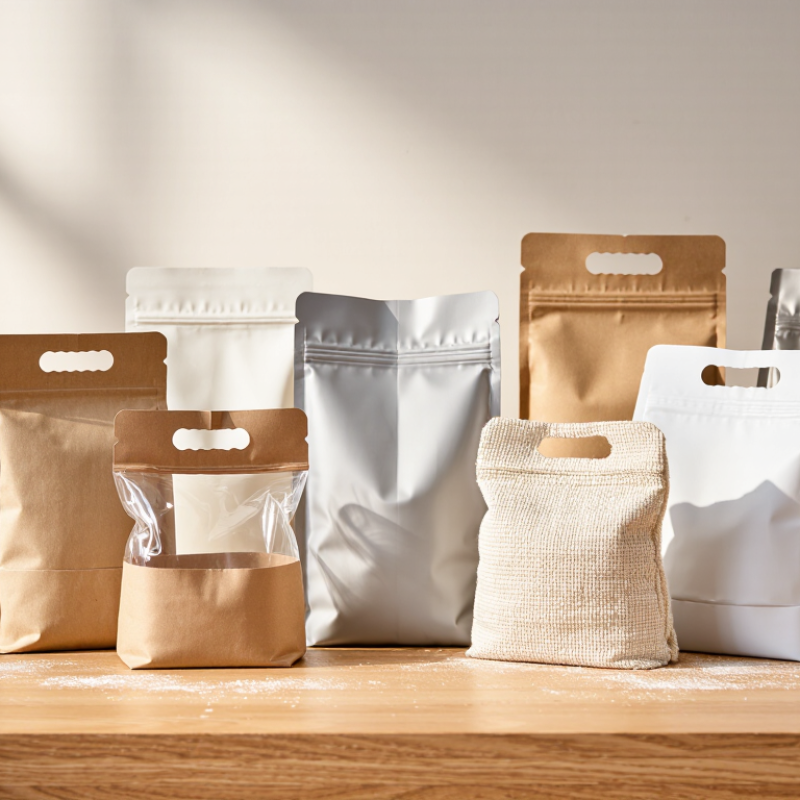
Defining Flour Pouches and Their Role in Global Packaging
Flour pouches are flexible bags designed to protect flour from moisture, dust, light, and handling damage. They may use paper, plastic film, or layered materials, depending on the product and distribution route. A strong pouch needs reliable seals, accurate filling, and enough strength for stacking. Small details matter.
For global buyers, packaging is part of supply-chain performance. A well-designed pouch helps maintain flour quality during warehouse storage, sea freight, and retail handling. Clear labeling supports traceability, while stable dimensions improve pallet efficiency. However, no pouch fits every market. Humid climates, long transit times, and different recycling systems can change the best material choice. I have found that laboratory data alone is not enough; real transport trials often reveal weak corners or leaking seals.
Tips: Test filled pouches under compression, vibration, and temperature changes. Check seal strength after production, not only during sampling. Ask manufacturers for material specifications, food-contact documentation, and batch records. Review whether the pouch opens cleanly without scattering flour. It sounds minor. It is not.
Manufacturers should also balance protection with material reduction. Thinner packaging may lower shipping weight, but it can increase puncture risks. Paper-based options may offer a familiar appearance, yet moisture resistance must be verified carefully. Buyers should compare actual performance, production consistency, and quality-control procedures rather than choosing by price alone. Mistakes still happen, especially when packaging is tested only in ideal conditions.
Top 10 Flour Pouch Manufacturers for Global Buyers
Defining Flour Pouches and Their Role in Global Packaging
Flour pouches are flexible packaging formats designed to protect flour from moisture, contamination, light and handling damage. The chart presents common nominal fill-weight examples used across retail and food-service packaging. Actual pouch sizes vary by country, flour density, packaging structure and distribution requirements; these figures are reference pack sizes rather than market-share data.
Key Criteria for Evaluating Flour Pouch Manufacturers
Top 10 Flour Pouch Manufacturers for Global Buyers
Key Criteria for Evaluating Flour Pouch Manufacturers
Choosing a flour pouch manufacturer requires more than comparing unit prices. In real sourcing projects, material performance often decides success. Ask for food-contact certificates, migration test results, and batch traceability records. The pouch should resist moisture, oxygen, punctures, and seal failure during shipping. A strong manufacturer can explain each layer, not just show a finished sample.
Production experience matters. Check whether the factory handles different pouch sizes, filling weights, closure types, and printing requirements. Request samples from recent production runs. Inspect the zipper, bottom gusset, seal width, and powder leakage. Ask about quality controls, equipment maintenance, and corrective actions. A clean factory tour helps, but it does not prove everything. I once trusted an attractive sample too quickly. The first bulk shipment exposed weak seals. That mistake changed my evaluation process.
Tips: Compare suppliers with the same specifications. Confirm minimum order quantities, lead times, inspection rules, and replacement policies in writing. Review sustainability claims carefully; recyclable structure claims need technical evidence and suitable local recovery systems. Request customer references from comparable markets. Also examine communication speed. Delayed answers may become delayed production. No supplier is perfect. A reliable partner admits limitations, measures defects, and improves them.
Regional Overview of the Top Flour Pouch Manufacturers
The strongest flour pouch manufacturers are distributed across several production regions, not one industrial center. East Asia often leads in automated printing, multilayer film production, and high-volume orders. South Asia offers flexible minimum quantities and competitive conversion costs. European producers commonly emphasize recyclable structures, precise sealing, and documented food-contact compliance. North American suppliers often provide strong logistics support for regional distribution. These differences matter when buyers compare the top ten manufacturers.
In the Middle East, manufacturers frequently develop pouches for dry climates, long transport routes, and warehouse storage. Latin American producers may offer practical formats for retail flour and food-service applications. Experienced buyers should inspect seal strength, puncture resistance, zipper performance, and filling-line compatibility. A pouch that looks excellent may still fail during pallet movement. Samples should be tested with real flour, not empty film.
Regional reputation alone is not enough. Buyers need factory audit records, material specifications, production capacity, and clear quality-control procedures. Ask whether the supplier checks oxygen transmission, moisture barriers, ink adhesion, and seal temperatures. Communication speed also deserves attention. Delayed answers can become costly during seasonal demand. A common mistake is choosing the lowest quotation without reviewing tooling, freight, and rejected-unit policies. Even capable manufacturers may need improvement in sustainability claims, so certificates should be verified independently.
Comparing Materials, Printing, Features, and Production Capabilities
Selecting among the top 10 flour pouch manufacturers requires more than comparing prices. Material choice controls shelf life, handling, and recyclability. Kraft paper gives a natural appearance, but it needs an inner PE or PP layer for moisture resistance. Woven PP offers stronger load performance for larger bags. Mono-material PE can simplify recycling, although its stiffness and print quality may require compromises. Smithers’ 2024 flexible packaging report values the global market at more than US$300 billion by 2028, showing why material engineering now matters commercially.
Printing capability deserves equal attention. Flexographic printing suits stable, high-volume orders, while rotogravure supports sharper images and longer runs. Digital printing reduces setup waste for small batches, but unit costs may rise. Bright graphics do not guarantee quality. Flour dust exposes weak seals quickly. Useful features include gusseted bases, carrying handles, tear notches, resealable zippers, and high-strength heat seals. FAO data reported global wheat production above 780 million tonnes in recent years, creating constant demand for reliable food packaging.
Production capability separates experienced suppliers from attractive catalogues. Buyers should check extrusion control, clean-room practices, inline vision inspection, seal-strength testing, and lot traceability. Food-contact declarations and migration tests should match the destination market. Ask for production samples, not only digital artwork. A pouch may look perfect yet collapse during pallet stacking. I would also question very short lead times; they can hide limited inspection or unstable raw-material planning. Low minimum orders are useful, but repeated small runs may increase color variation and waste.
Selecting the Right Flour Pouch Supplier for International Orders
Top 10 Flour Pouch Manufacturers for Global Buyers
Selecting the right flour pouch supplier for international orders requires more than comparing unit prices. A suitable manufacturer should understand flour’s sensitivity to moisture, oxygen, light, and rough handling. Ask for food-contact declarations, material specifications, migration reports, and recent quality records. These documents reveal whether the supplier follows a controlled process.
Request samples before discussing large volumes. Check pouch dimensions, zipper alignment, seal strength, print accuracy, and filling performance. Drop-test filled pouches from pallet height, then inspect leaks and corner damage. Suppliers should also explain minimum order quantities, production lead times, carton packing, and export experience. Clear answers matter.
Do not overlook communication. A reliable partner confirms artwork details, shipment terms, inspection procedures, and corrective actions in writing. Factory audits or third-party inspections can support this evaluation. However, paperwork alone is not enough. A polished sample may not represent regular production. Ask for batch traceability and references from comparable export markets. No checklist is perfect. I would question any supplier promising unusually short delivery times without discussing raw material availability. Humidity, port delays, and seasonal demand can change the schedule quickly. The strongest choice usually balances technical performance, transparent costs, dependable communication, and realistic capacity.