Top 10 Carbide Burrs for Perfect Precision Cutting?
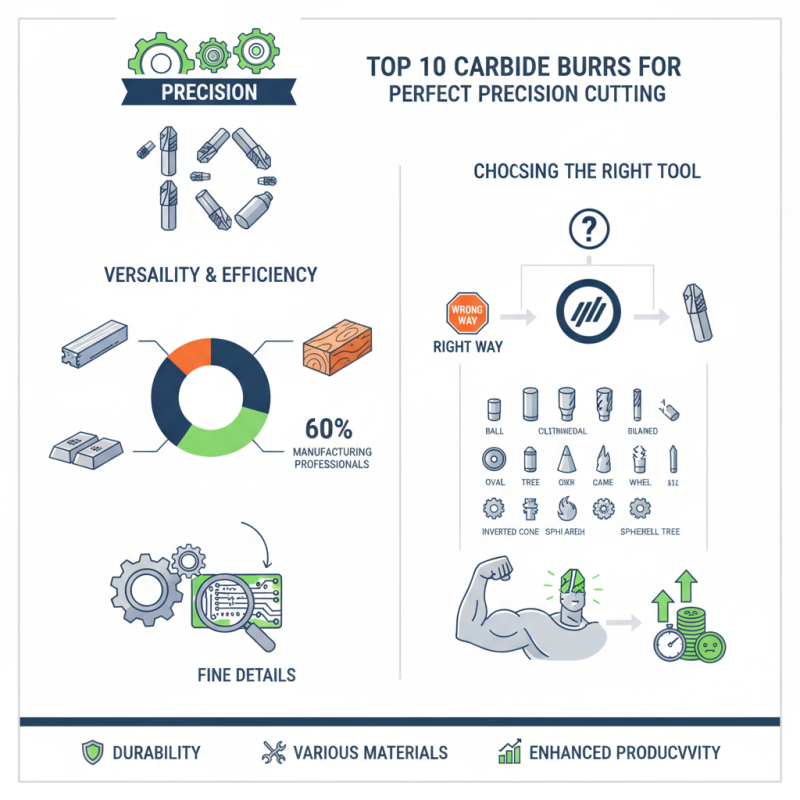
In the world of precision cutting, Carbide Burrs stand out for their versatility and efficiency. Data from industry reports indicates that over 60% of manufacturing professionals rely on carbide burrs for metalworking and machining tasks. These tools are known for their durability and ability to create fine details. They can handle various materials, from steel to aluminum, providing excellent results.
Despite their advantages, not all carbide burrs are created equal. The market offers a wide selection, which can be overwhelming. Choosing the right tool requires knowledge and experience. Many users mistakenly select burrs based solely on brand reputation, ignoring specific design features. This can lead to suboptimal performance and increased costs over time.
Understanding the different shapes and sizes of carbide burrs is crucial. Each design serves a unique purpose, and selecting the wrong type can hinder precision. The right tool can enhance productivity, while the wrong one can cause frustration. Therefore, careful consideration is necessary when investing in these essential tools.
Understanding Carbide Burrs and Their Applications
Carbide burrs are essential tools in precision cutting and shaping tasks. They are made from tungsten carbide, offering durability and sharpness. These burrs are used in metalworking, woodworking, and even in the dental field for intricate tasks. Their unique shapes allow for different applications, making them versatile tools for craftsmen.
When selecting a carbide burr, consider the material you're working with. Softer materials may not require as aggressive a burr. It’s crucial to understand how each shape performs. For instance, a flame-shaped burr is excellent for smoothing, while a cylindrical burr excels in material removal. Experimentation can reveal which burr suits your specific needs.
Tips: Always wear appropriate safety gear. Dust and particles can be harmful, so a mask is recommended. During use, maintain a steady hand. An unsteady grip can lead to imprecise cuts. Regularly check the burr for wear, as dull tools can create rough edges. Keeping your tools in good condition ensures precision and extends their lifespan.
Types of Carbide Burrs for Precision Cutting
Carbide burrs are essential tools for precision cutting across various industries, including automotive and metalworking. Different types of carbide burrs serve specific purposes, ensuring optimal results. For cylindrical operations, the cylindrical burr is commonly used. Its design allows for efficient material removal. The pointed burrs, on the other hand, excel in intricate work. Their sharp tips make them ideal for engraving or detailed carving.
Recent industry reports highlight that more than 75% of professionals prefer tungsten carbide burrs over other materials. This preference stems from carbide's durability and toughness. With a hardness rating of around 88 HRA, carbide burrs can handle demanding applications. However, improper usage can lead to rapid wear or chipping. Users must understand the appropriate speed and feed rates to maximize burr lifespan.
In terms of shapes, various designs exist such as flame, ball, and tree shapes. Each shape suits particular tasks, but selecting the wrong burr can compromise precision. Statistics show that 30% of operators encounter issues due to mismatched burr shapes. Continuous training and knowledge sharing within teams can mitigate these mistakes. Investing in education about carbide burr types can lead to significant performance improvements.
Key Features to Look for in Carbide Burrs
When selecting carbide burrs for precision cutting, consider key features that enhance their performance. A crucial aspect is the shape of the burr. Different shapes cater to distinct tasks, such as shaping, smoothing, or deburring. For instance, spherical burrs are excellent for cavity work. On the other hand, cylindrical burrs excel in surface finishing. Understanding the application can guide you to choose the right shape for your needs.
Another important feature is the burr's diameter. Smaller diameters allow for intricate detailing, while larger ones are ideal for removing material quickly. Look for burrs with a high cutting speed to increase efficiency. Additionally, the material and coating can impact durability. Look for burrs made of high-quality carbide, as they last longer and maintain sharpness. Remember, not all carbide burrs are equal. Some may wear out quickly, affecting precision. Balancing your needs with the available options can be challenging, but it's essential for optimal results.
Finally, consider the shank size, as it must fit securely into your tool. A snug fit minimizes vibration, leading to cleaner cuts. Attention to these details can make a significant difference in your projects. It’s not just about picking a burr; it’s about choosing the right one for the job. With careful selection, you can enhance your cutting precision and overall project quality.
Top 10 Recommended Carbide Burrs for Various Tasks
Carbide burrs are essential tools for precision cutting across various applications. Their durability and efficiency make them ideal for tasks ranging from metalworking to woodworking. According to recent industry reports, the global market for carbide burrs is expected to grow significantly, highlighting their importance in manufacturing and crafting sectors.
When selecting the right carbide burr, consider the task at hand. Different shapes and sizes cater to specific jobs. For instance, a spherical burr is perfect for contouring, while a tapered burr excels at detailing. Each design serves a unique purpose, and understanding this can enhance your efficiency.
Tips: Always assess your material type before choosing a burr. Softer materials require less aggressive burrs, while harder surfaces might need a more robust option. Regularly inspect your tools for wear and tear. A dull burr not only affects precision but can also lead to safety hazards. Keep in mind that even the best tools can produce unsatisfactory results if not used correctly. Always focus on technique and pressure when handling your burrs.
In the hands of skilled artisans, carbide burrs can produce exceptional details. However, an overshared technique can lead to imperfections. Take time to practice on scrap material. This approach minimizes mistakes and enhances your skill. Remember, the right carbide burr paired with the correct technique can significantly impact your project outcomes.
Tips for Using Carbide Burrs Effectively and Safely
Carbide burrs are essential tools for precision cutting in various industries. Using them effectively and safely is key to getting the best results. Here are some tips to maximize your experience.
Choose the right burr for your application. Different shapes and sizes serve different purposes. For instance, ball-shaped burrs are great for contouring. In contrast, cylinder-shaped ones excel at flat surface work. Understanding these distinctions is crucial for success.
Always wear appropriate safety gear. Goggles and masks protect you from debris. It’s also wise to work in a well-ventilated space. Keep your workspace organized to avoid accidents. Lastly, check your burrs regularly for wear and tear. Using worn-out tools can lead to poor results and may increase the risk of injury. Taking these simple precautions enhances both your performance and safety.
Top 10 Carbide Burrs for Perfect Precision Cutting
| Burr Type | Diameter (inch) | Cutting Length (inch) | Material | Applications |
| Straight | 1/8 | 1 | Carbide | Wood, Plastic |
| Ball | 1/4 | 1 | Carbide | Metal, Plastic |
| Flame | 3/8 | 1.5 | Carbide | Metal, Wood |
| Tapered | 1/8 | 1 | Carbide | Stone, Metal |
| Conical | 1/4 | 1 | Carbide | Metal, Plastic |
| Radius | 3/16 | 0.75 | Carbide | Wood, Metal |
| Double Cut | 1/4 | 1 | Carbide | Metal, Plastic |
| Cross Cut | 1/8 | 1 | Carbide | Metal, Stone |
| Sphere | 5/16 | 1 | Carbide | Metal, Plastic |
| V-Groove | 1/4 | 1 | Carbide | Wood, Stone |