Learn More With Our

Blog

Who Are the Top Treatment Plant Manufacturers in China?

Choosing a Treatment Plant manufacturer is not just a price comparison. Buyers need to examine process design, energy use, automation, delivery records, and after-sales support. Details matter: a clear commissioning plan and accessible spare parts can be as important as a polished equipment list.

The UN-Water and WHO/UN-Habitat report Progress on Wastewater Treatment: 2024 Update estimates that 42% of household wastewater worldwide was not safely treated in 2022. That gap gives plant selection real weight. China’s manufacturers serve a broad range of municipal and industrial needs, but their capabilities differ. A supplier experienced in municipal sewage may not be the best fit for a factory’s variable wastewater.

Water-reuse researcher Professor Takashi Asano’s work offers a useful principle, paraphrased here: treatment quality should match the intended reuse. That means asking for verified effluent results, not relying on impressive capacity figures alone. Look closely. Ask for project references, operating data, and clear warranty terms. This comparison is imperfect; public data do not always make suppliers easy to assess. Still, it provides a practical starting point for identifying China’s leading Treatment Plant manufacturers.
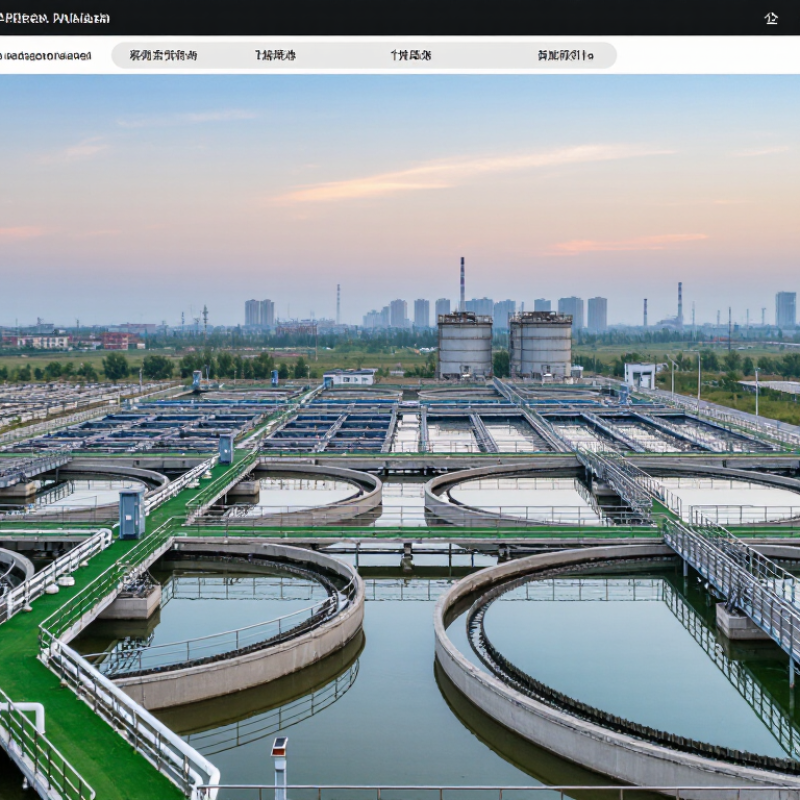
Who Are the Top Treatment Plant Manufacturers in China?

How China Defines Treatment-Plant Manufacturers: EPC, Equipment, and O&M

Who Are the Top Treatment Plant Manufacturers in China?

How China Defines Treatment-Plant Manufacturers: EPC, Equipment, and O&M

In China, “treatment-plant manufacturer” can describe three very different roles. An EPC contractor designs and builds the full facility, coordinating civil works, process design, installation, and commissioning. An equipment supplier provides specific units, such as pumps, screens, aeration systems, or membrane modules. An operations and maintenance provider runs the plant after handover, tracking water quality, equipment uptime, energy use, and sludge handling. These roles may overlap, but they are not interchangeable.

The Ministry of Housing and Urban-Rural Development’s 2023 China Urban-Rural Construction Statistical Yearbook reports an urban wastewater treatment rate of about 98%. That figure describes treatment coverage, not the performance of every plant or supplier. Buyers should examine project references, process guarantees, commissioning records, and operating results. A polished equipment list alone says little about how a facility performs during peak flows or routine maintenance. This distinction is easy to overlook.

Tips: Ask whether quoted capacity means design flow or proven operating flow. Request recent effluent data, energy consumption, and maintenance records. Then confirm who remains responsible after commissioning. Even strong contracts can leave gaps between equipment warranties and O&M duties.

What the Market Requires: 63.9 Billion m³ of Urban Wastewater Treated in 2022

China treated 63.9 billion cubic meters of urban wastewater in 2022, a scale that puts plant reliability under constant pressure. That averages roughly 175 million cubic meters per day across the year. The daily figure is only an average, though; rainfall and local demand can shift flows sharply. A treatment line must handle those changes without letting screens clog, pumps strain, or biological processes lose stability.

For operators comparing treatment plant manufacturers, this demand makes practical engineering more important than headline capacity. Ask how equipment performs under variable flow, how easily operators can inspect it, and whether replacement parts are accessible. A clear process diagram and commissioning records can reveal more than a polished brochure. Small details matter: a sensor placed where solids collect may give misleading readings, while poor access can slow routine maintenance. The national treatment volume signals substantial need, but it does not show how evenly capacity is distributed or how well each plant performs. That gap deserves attention.

Who Leads Integrated Municipal Projects: BEWG, Capital, and Everbright

In China’s municipal wastewater sector, integrated project leaders are judged by more than treatment equipment. They must connect planning, construction, operations, and long-term maintenance. A capable provider can coordinate a plant with pumping stations, pipelines, and nearby communities. That coordination is often where schedules become difficult.

Municipal projects also demand practical engineering. Teams need to match treatment processes to local influent, land limits, discharge targets, and seasonal flows. A useful proposal explains these choices clearly, rather than relying on impressive capacity figures alone. At a site visit, buyers can ask how operators handle sludge, equipment failures, and sudden flow changes. Details matter.

Strong delivery records should include evidence from projects with comparable conditions. Buyers can review commissioning timelines, operating data, maintenance plans, and responses to performance issues. Independent checks help, too. The comparison is not always tidy: published figures may use different boundaries or reporting periods. That deserves scrutiny. Integrated providers can reduce handoff problems, but broad capabilities do not guarantee a smooth project. Local staffing, clear contracts, and realistic operating budgets remain essential.

China’s Integrated Municipal Wastewater Projects: Treatment Standards and Delivery Scope

A standards-based reference for evaluating municipal wastewater treatment projects. The discharge limits below are national standard values, not performance claims for any individual manufacturer or project operator.

Project dimension Integrated municipal project scope Relevant benchmark or evaluation point
Collection and conveyance Sewer connections, pumping stations, and conveyance infrastructure that deliver municipal wastewater to the treatment facility. Assess network coverage, inflow and infiltration control, pumping reliability, and compatibility between collection capacity and plant design capacity.
Treatment process A project may combine preliminary treatment, biological treatment, secondary clarification, and additional nutrient-removal or polishing processes as required by the discharge target. Verify that the process design can meet the applicable discharge standard under expected influent and operating conditions.
Discharge limits: Class 1A National pollutant concentration limits commonly used as a reference for stringent municipal wastewater discharge requirements. COD ≤ 50; BOD5 ≤ 10; SS ≤ 10; ammonia nitrogen ≤ 5 (≤ 8 when water temperature is at or below 12°C); total nitrogen ≤ 15; total phosphorus ≤ 0.5 mg/L.
Discharge limits: Class 1B A less stringent national discharge class than Class 1A; the applicable class depends on the project’s regulatory requirements. COD ≤ 60; BOD5 ≤ 20; SS ≤ 20; ammonia nitrogen ≤ 8 (≤ 15 when water temperature is at or below 12°C); total nitrogen ≤ 20; total phosphorus ≤ 1.0 mg/L.
Discharge limits: Class 2 Another national discharge class under the same standard; site-specific permits and local requirements should also be checked. COD ≤ 100; BOD5 ≤ 30; SS ≤ 30; ammonia nitrogen ≤ 25 (≤ 30 when water temperature is at or below 12°C); total nitrogen ≤ 25; total phosphorus ≤ 3.0 mg/L.
Sludge management Sludge thickening, dewatering, transport, and treatment or disposal are important parts of whole-plant planning. Review sludge quantity assumptions, dewatering performance, end-use or disposal route, and compliance with applicable local requirements.
Reclaimed water and resource recovery Where planned, additional treatment can support non-potable reuse, such as landscape irrigation or industrial applications, subject to the intended use and applicable standards. Match the treatment train and monitoring plan to the specified reuse purpose; do not assume that discharge compliance alone establishes reuse suitability.
Operations and performance verification Long-term operation includes process control, equipment maintenance, laboratory or online monitoring, and reporting. Evaluate monitoring coverage, operating-cost assumptions, maintenance arrangements, and documented compliance results against the project’s permit.

Source: China’s Discharge Standard of Pollutants for Municipal Wastewater Treatment Plants (GB 18918-2002), Table 1. Concentrations are in mg/L. For total phosphorus, the standard specifies different limits for certain smaller plant-size categories; confirm the applicable limit and any local requirements for each project.

Which Technology Specialists Stand Out: OriginWater and Membrane Systems

China’s treatment-plant manufacturers include specialists in membrane-based processes, where compact equipment can help meet strict water-quality targets. These systems are used in municipal wastewater treatment, industrial reuse, and drinking-water applications. Their performance depends on more than membrane selection. Pretreatment, operating pressure, cleaning schedules, and operator training all matter. Small details matter.

A capable technology provider should explain how its process performs under real feed-water conditions. Ask for pilot results, design assumptions, and operating data from comparable projects. For example, a plant treating variable industrial wastewater may need stronger pretreatment than a municipal facility. Membrane fouling can raise energy use and shorten cleaning intervals. It is worth checking how the supplier monitors these changes and supports operators after commissioning.

Buyers should also examine lifecycle costs, replacement intervals, and local service capacity. A low equipment price may not reflect the cost of chemicals, power, or downtime. Membrane systems are not a universal answer; some sites need different treatment stages or a hybrid design. Project documents can look convincing, yet actual influent quality may vary by season. That gap deserves careful review before choosing a manufacturer.

How to Compare Suppliers: Capacity, Compliance, Energy Use, and Lifecycle Cost

A treatment plant’s rated capacity is only a starting point. Ask whether the supplier has delivered systems for similar influent strength, temperature, and daily flow variation. A plant sized for average flow may struggle during sharp morning peaks. Request process calculations, equipment lists, and operating data from comparable projects. Numbers need context.

Compliance should be checked against the project’s discharge limits and local approval requirements, not a generic certificate. Review test reports, sampling methods, and commissioning records. Confirm who handles permits, operator training, and performance testing. Ask for evidence. A polished document is useful, but it cannot replace verifiable results from a running plant.

Energy comparisons need the same basis: flow treated, effluent quality, and operating load. Request measured power use for blowers and pumps, plus assumptions about sludge handling. Then estimate lifecycle cost, including chemicals, replacement parts, maintenance labor, and downtime. That gap matters. A lower purchase price can hide expensive service needs. Check spare-part availability and warranty limits in writing. I would still question unusually low energy figures; real influent conditions rarely stay neat. The supplier should explain what changes when flow or water quality shifts.

Top