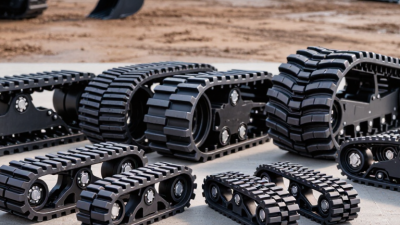
How to Choose the Best Used Rubber Tracks for Sale?
Choosing the right used rubber tracks begins with evidence, not the lowest listed price. A track may look sound while hiding stretched cords, uneven lug wear, or hardened rubber. Those defects can damage sprockets and increase downtime on muddy jobsites.
Fortune Business Insights identifies construction equipment as a major rubber-track application and forecasts continued market growth through the decade. Its market analysis also highlights durability, equipment compatibility, and replacement demand as important purchasing factors. These findings support a practical rule: match the track to the machine, working surface, and expected operating hours.
“Undercarriage condition is one of the clearest indicators of a machine’s remaining value,” says Chris Sleight, managing director of Off-Highway Research. That principle applies directly to used rubber tracks. Buyers should verify the machine model, track width, pitch, link pattern, and manufacturer markings before comparing prices. A 450 mm track is not a safe substitute for a 400 mm track simply because it is cheaper.
Look closely. Measure tread depth. Inspect the inner guide area. Check for exposed steel, missing lugs, sidewall cuts, and oil contamination. Ask for operating photographs, purchase records, and the seller’s inspection method. The Used Equipment and Machinery Association recommends documented condition checks for second-hand equipment, although track-specific reporting remains inconsistent.
That gap matters. Some listings offer only a few photographs.
A careful buyer should also calculate delivery costs, fitting time, and warranty limits. An inexpensive pair can become expensive after one premature failure. This guide explains how to compare used rubber tracks with greater confidence, while acknowledging one uncomfortable truth: perfect history is rarely available.
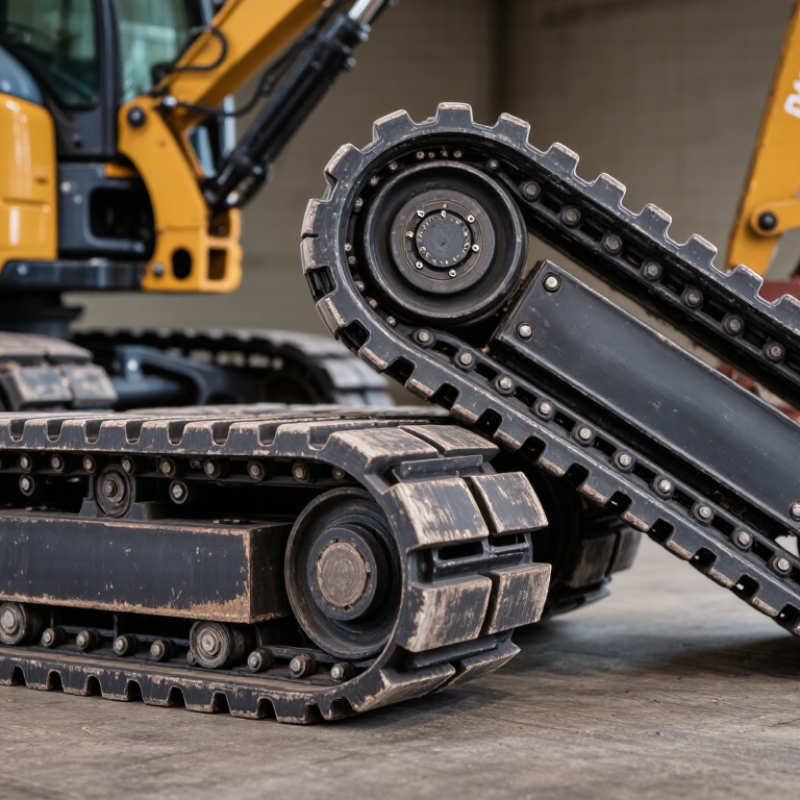
Understanding Used Rubber Track Sizes and Equipment Compatibility
Choosing the best used rubber tracks for sale starts with exact measurements, not appearance. In workshop inspections, three details decide fit: width, pitch, and link count. Measure the track width across the tread, then measure pitch from one metal link center to the next. Count every link carefully. A small error causes trouble.
Compare these measurements with the machine manual and undercarriage specifications. Confirm sprocket tooth spacing, roller clearance, and frame width before ordering. Two tracks can share similar dimensions yet perform differently because of tread design or internal construction. A track made for firm soil may wear quickly on rocky ground. Fit matters most.
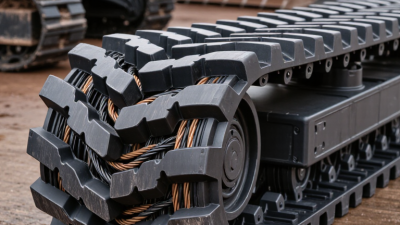
Inspect the used track in daylight. Look for deep cuts, exposed steel cords, missing tread blocks, dry rot, and uneven wear. Check whether the guide lugs remain firm and evenly shaped. Ask for close photographs of the inner surface, not only the clean outer tread. A polished track can hide serious damage. I have seen buyers choose a cheaper option, then face removal and installation costs within weeks. That experience deserves reflection: low price is not the same as good value. Measure twice.
Comparing Track Wear, Remaining Service Life, and Replacement Costs
When choosing used rubber tracks, compare wear before comparing prices. Field service-life ranges commonly fall between 1,200 and 2,000 operating hours, according to service-life data summarized in EquipmentWatch’s 2024 Cost Recovery Handbook. Soil, turning habits, and incorrect tension can shorten that range sharply.
Measure the tread depth at several points, not only the center. Uneven lugs often indicate misalignment or worn rollers. Check for exposed cords, cuts, missing guide blocks, and cracks inside the track. A track with 60% remaining tread may still fail early if its steel cables are damaged. The Rubber Manufacturers Association recommends evaluating cracking, deformation, and structural damage rather than relying on appearance alone. Look closely.
Replacement cost should include labor, delivery, and possible sprocket replacement. EquipmentWatch’s 2024 Rental Rate Blue Book treats undercarriage components as significant ownership-cost items, because one damaged part can accelerate wear elsewhere. Compare the seller’s price with a complete replacement estimate from a qualified service technician. I would not trust a low hour-meter reading by itself. That judgment is imperfect, but maintenance records, operating photos, and measured tread depth provide stronger evidence. A used track is valuable only when its remaining service life exceeds the cost and disruption of replacing it soon.
How to Choose the Best Used Rubber Tracks for Sale? - Comparing Track Wear, Remaining Service Life, and Replacement Costs
Practical comparison of common used rubber-track conditions based on tread wear, operating hours, structural inspection, and estimated replacement economics
| Used Track Condition |
Typical Tread Height Remaining |
Approx. Wear Level |
Estimated Remaining Service Life |
Typical Prior Use |
Inspection Findings |
Estimated Used-Track Price |
Estimated New-Track Replacement Cost |
Value Assessment |
| Nearly New / Low Use |
90–100% of original height |
0–10% |
1,200–1,800 operating hours |
Less than 500 hours |
No exposed steel; flexible rubber; minimal lug rounding; sprocket contact areas show little polishing |
US$900–US$1,500 per track |
US$1,500–US$2,400 per track |
Excellent |
| Good Used Condition |
70–89% of original height |
10–30% |
800–1,200 operating hours |
500–1,000 hours |
Even tread wear; no major cuts; guide lugs remain upright; steel cables are fully covered |
US$650–US$1,050 per track |
US$1,200–US$2,000 per track |
Good Value |
| Moderate Wear |
50–69% of original height |
30–50% |
450–800 operating hours |
1,000–1,800 hours |
Visible lug rounding; moderate surface scuffing; no deep cuts or missing chunks; moderate guide-lug wear |
US$450–US$750 per track |
US$1,000–US$1,700 per track |
Conditional |
| Heavy Wear |
30–49% of original height |
50–70% |
200–450 operating hours |
1,800–2,500 hours |
Rounded lugs; visible cracking between tread blocks; noticeable guide-lug wear; inspect carefully for exposed cable |
US$250–US$500 per track |
US$900–US$1,500 per track |
Short-Term Only |
| End-of-Life / Salvage |
Below 30% of original height |
More than 70% |
Less than 200 operating hours |
More than 2,500 hours |
Deep cuts, missing tread sections, exposed or broken steel cable, severe guide-lug damage, or uneven deformation |
US$100–US$300 per track |
US$800–US$1,400 per track |
Usually Avoid |
Checking Seller Reliability, Track History, and Available Warranty
When choosing used rubber tracks, seller reliability deserves more attention than a low listing price. EquipmentWatch’s 2024 Used Equipment Market Report identifies age, operating hours, and maintenance records as key value indicators. Ask for the seller’s legal business details, inspection procedure, and return terms. Reliable sellers should provide clear photographs, tread measurements, and serial or batch information. Vague answers are expensive.
Ask for proof.
Track history can reveal hidden costs. Request installation dates, machine hours, terrain conditions, and reasons for removal. A track used on abrasive rock may look acceptable but contain accelerated internal wear. Measure tread depth at several points, not only near the center. Check for exposed cords, uneven lug wear, sidewall cuts, and hardened rubber. The Association of Equipment Manufacturers’ equipment outlook reports continue to stress maintenance visibility as a major factor in used-equipment purchasing decisions.
Warranty language matters more than warranty length. Confirm whether coverage includes premature cracking, broken cords, delamination, and fitting problems. Get exclusions in writing. A six-month warranty may be stronger than a vague twelve-month promise. Payment, shipping, and installation responsibilities should also be documented. I once treated clean-looking rubber as proof of good condition; that was a poor assumption. A short inspection video would have exposed the uneven wear earlier. Leave room for doubt, and arrange an independent inspection when the purchase value is high.
How to Choose the Best Used Rubber Tracks for Sale?
A practical 100-point evaluation model based on seller reliability, track history, condition, and warranty coverage.
Seller reliability receives the highest weighting because clear business information, responsive communication, and verifiable transaction records reduce purchasing risk. Track history and physical condition help confirm remaining service life, while warranty and return terms provide additional protection after delivery. Use this scorecard together with photos, measurements, operating hours, and written warranty conditions before buying.
Evaluation weights shown are an illustrative buyer checklist totaling 100 points, not market-share or company-performance data.
Selecting the Best Value Used Rubber Tracks for Your Equipment
Choosing the best value used rubber tracks starts with matching the track to your equipment, not choosing the lowest price. Check the track width, pitch, number of links, and guide lug design against your machine’s specifications. A small measurement error can cause poor alignment, faster wear, or installation problems. Measure twice.
Inspect the track in person whenever possible. Look for deep cuts, exposed steel cords, missing lugs, uneven wear, and hardened rubber. Surface scratches may be acceptable, but cracks around the drive lugs deserve careful attention. In field inspections, I have found that a track with moderate tread wear can outperform a cheaper track with hidden cord damage. Ask about operating hours, storage conditions, previous ground surfaces, and the track’s service history. Sellers cannot always provide every detail, so judge the evidence carefully.
Tips: Compare remaining tread depth with the seller’s photos. Request clear images of the inner surface and drive lugs. Confirm both tracks have similar wear if purchasing a pair. Check the return policy before payment, especially when measurements are uncertain. Consider your worksite too; rocky ground demands stronger construction than soft soil. I once underestimated storage damage on a visually clean track, so I now inspect rubber flexibility by checking for stiffness and unusual discoloration. Used tracks are not perfect, but transparent information helps you pay for usable service rather than appearance.