| 1 |
Urban paving, finished driveways, lawns, and landscaped areas |
Rubber tracks with a non-marking tread |
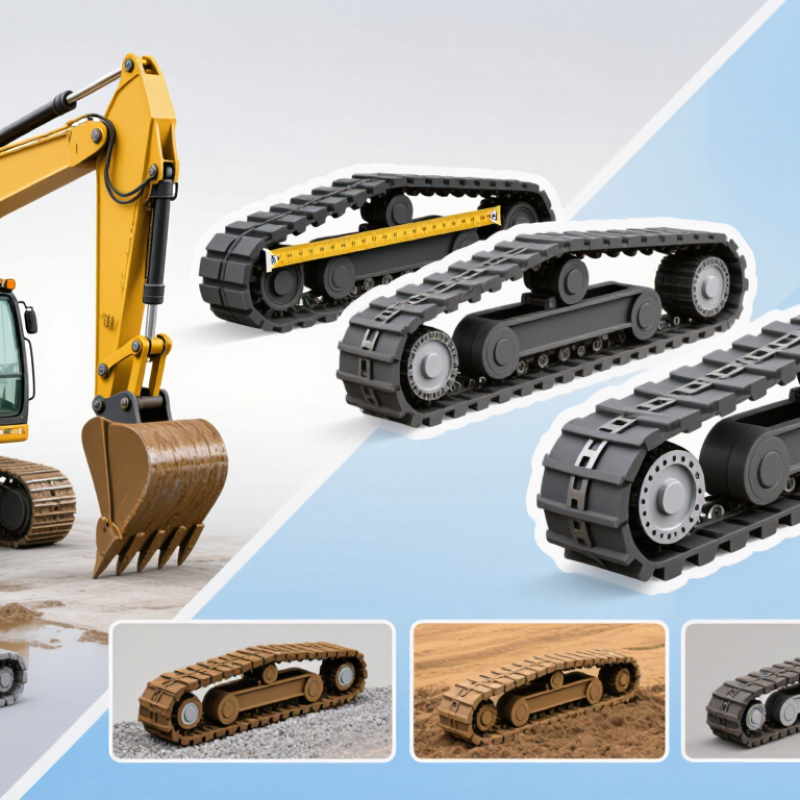
Confirm the machine’s operating weight, track width, tread pattern, and manufacturer-approved track size. Choose a tread designed to reduce ground disturbance. |
Lower risk of scratching hard surfaces, reduced vibration, quieter operation, and improved maneuverability in confined areas. |
Rubber can be cut by sharp debris, damaged by prolonged exposure to oils or chemicals, and worn faster on abrasive surfaces. |
★★★★★ Excellent |
| 2 |
Rocky ground, demolition work, and sites containing concrete or metal debris |
Heavy-duty steel tracks or rubber tracks with reinforced construction |
Check shoe thickness, link strength, undercarriage compatibility, and the presence of sharp or abrasive materials. Inspect the undercarriage frequently. |
Steel tracks provide strong resistance to punctures, cuts, and severe abrasion. Reinforced rubber tracks offer a balance between protection and surface control. |
Steel tracks may damage finished surfaces, increase noise and vibration, and place greater demands on the undercarriage. |
★★★★★ Excellent |
| 3 |
Mud, clay, soft soil, and wet agricultural ground |
Wide rubber tracks with an open, self-cleaning tread |
Prioritize low ground pressure, adequate lug spacing, and a tread that sheds mud. Verify that the wider track does not exceed the machine’s approved clearance. |
Improved flotation, better traction in soft soil, and less tendency to sink compared with narrow tracks. |
Mud can pack between the lugs. Excessive track width or incorrect tension can increase wear and steering resistance. |
★★★★☆ Very good |
| 4 |
Sand, loose gravel, and dry granular soil |
Wide rubber tracks or wide steel shoes with a suitable grouser profile |
Match track width and shoe design to the required ground pressure. Avoid an aggressive tread that causes unnecessary digging or material displacement. |
Greater contact area helps distribute machine weight and can improve stability on loose surfaces. |
Fine sand and gravel can accelerate wear in rollers, idlers, and sprockets. Very aggressive grousers may reduce travel efficiency. |
★★★★☆ Very good |
| 5 |
Forestry, recycling, and sites with branches, wire, scrap, or other puncture hazards |
Steel tracks or purpose-built reinforced rubber tracks |
Look for protection against cuts and punctures, strong track cores, reliable sprocket engagement, and suitable guarding around the undercarriage. |
Better resistance to sharp objects and severe mechanical damage than standard light-duty rubber tracks. |
Steel can mark or damage paved surfaces. Reinforced rubber tracks still require inspection after contact with wire, rebar, or sharp scrap. |
★★★★★ Excellent |
| 6 |
Mixed projects involving both paved surfaces and unprepared ground |
General-purpose rubber tracks or interchangeable rubber-and-steel track systems |
Choose a tread pattern suited to the most frequent surface. Consider track-change time, machine compatibility, transport requirements, and replacement availability. |
Provides a practical compromise between surface protection, traction, comfort, and operating flexibility. |
A compromise track may not perform as well as a specialized track in extreme mud, rock, demolition, or high-abrasion work. |
★★★★☆ Very good |
| 7 |
Long travel distances, steep slopes, or work requiring frequent turning |
Correctly sized rubber or steel tracks with the proper tread and tension |
Check the machine’s approved track dimensions, pitch, width, tension procedure, and load rating. Inspect sprockets, rollers, idlers, and track alignment as a complete system. |
Correct sizing improves traction, stability, travel efficiency, and component life. Proper tension helps prevent derailment and premature wear. |
Over-tight tracks increase friction and wear; loose tracks can derail. Travel on hard surfaces can accelerate rubber wear and heat buildup. |
★★★★★ Essential |